
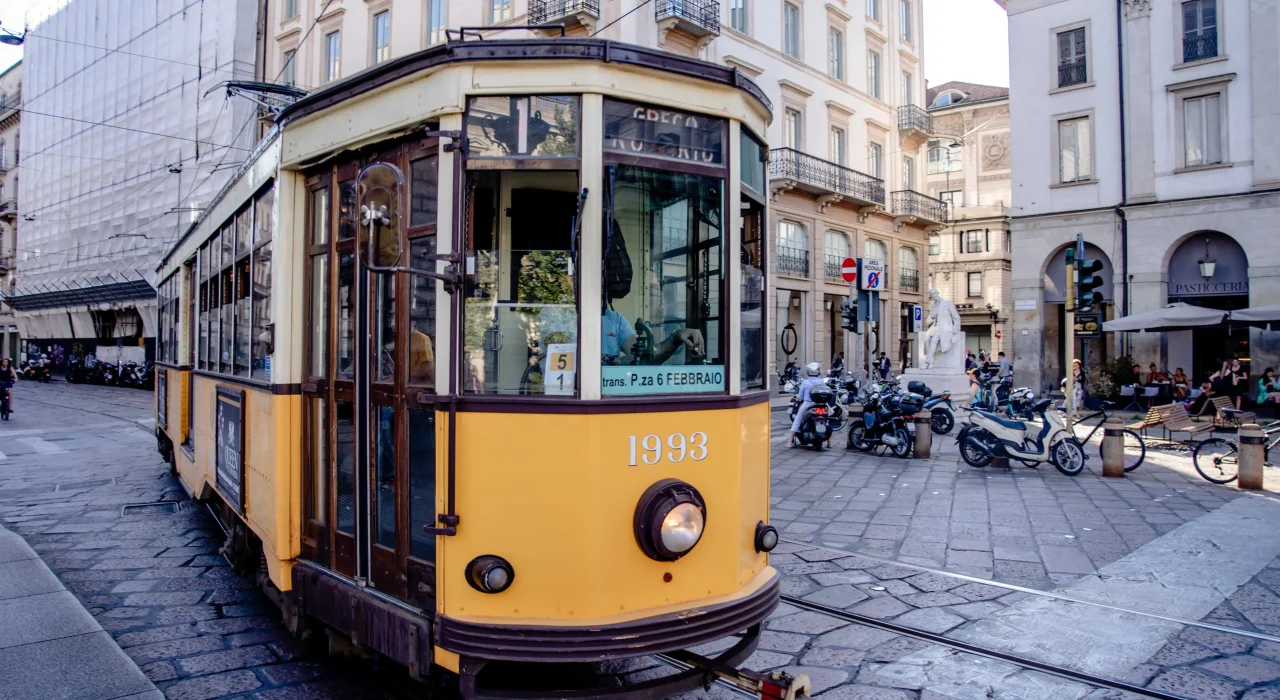
From the unmistakable clang of a 1920s tram to today’s sleek modern carriages, trams in Milan are more than public transport — they’re part of the sound, look and character of the city.
There are certain sounds that belong to a city.
In Milan, one of them is the unmistakable metallic rumble of an old tram making its way along the tracks: the clatter of wheels over rails, the occasional squeal as it rounds a corner and, above it all, the sharp ding-ding of its bell.
You can hear it coming before you see it.
Then around the corner appears one of Milan’s old trams, trundling quite happily through a city otherwise preoccupied with speed, technology and the future.
Milan has many symbols. The Duomo. The Galleria. Risotto alla milanese. Fashion. Design. Possibly people wearing sunglasses when there is no discernible sun.
And then there are the trams. Some are modern, very long and can accommodate a large number of passengers (we call them “jumbo”). Others are much, much older.
For visitors, particularly the oldest ones can look almost like a tourist attraction. For the Milanese, they’re simply part of the city. We wait for them, run for them, complain when they don’t come and barely notice that some of the vehicles carrying people to work were designed when their great-grandparents were young.
That’s perhaps the most Milanese thing about them.
Milan trams: a love affair that began long before the Metro
Milan was a tram city long before it became a Metro city.
Electric trams began running in Milan at the end of the 19th century, and by the early decades of the 20th, the tram had become an essential part of everyday urban life. The municipality took direct control of the city’s tram network in 1917; Milan’s first Metro line would not open until 1964.
Look at old photographs of central Milan and you quickly realise just how important the tram once was. Piazza Duomo was crossed by so many tracks that the complex circulation system became known as the carosello tranviario — the tram carousel. As Milan grew and road traffic increased, that arrangement eventually became impractical and was dismantled in the 1920s.
The city was expanding rapidly. More people had to travel greater distances, and Milan needed trams capable of carrying large numbers of passengers efficiently.
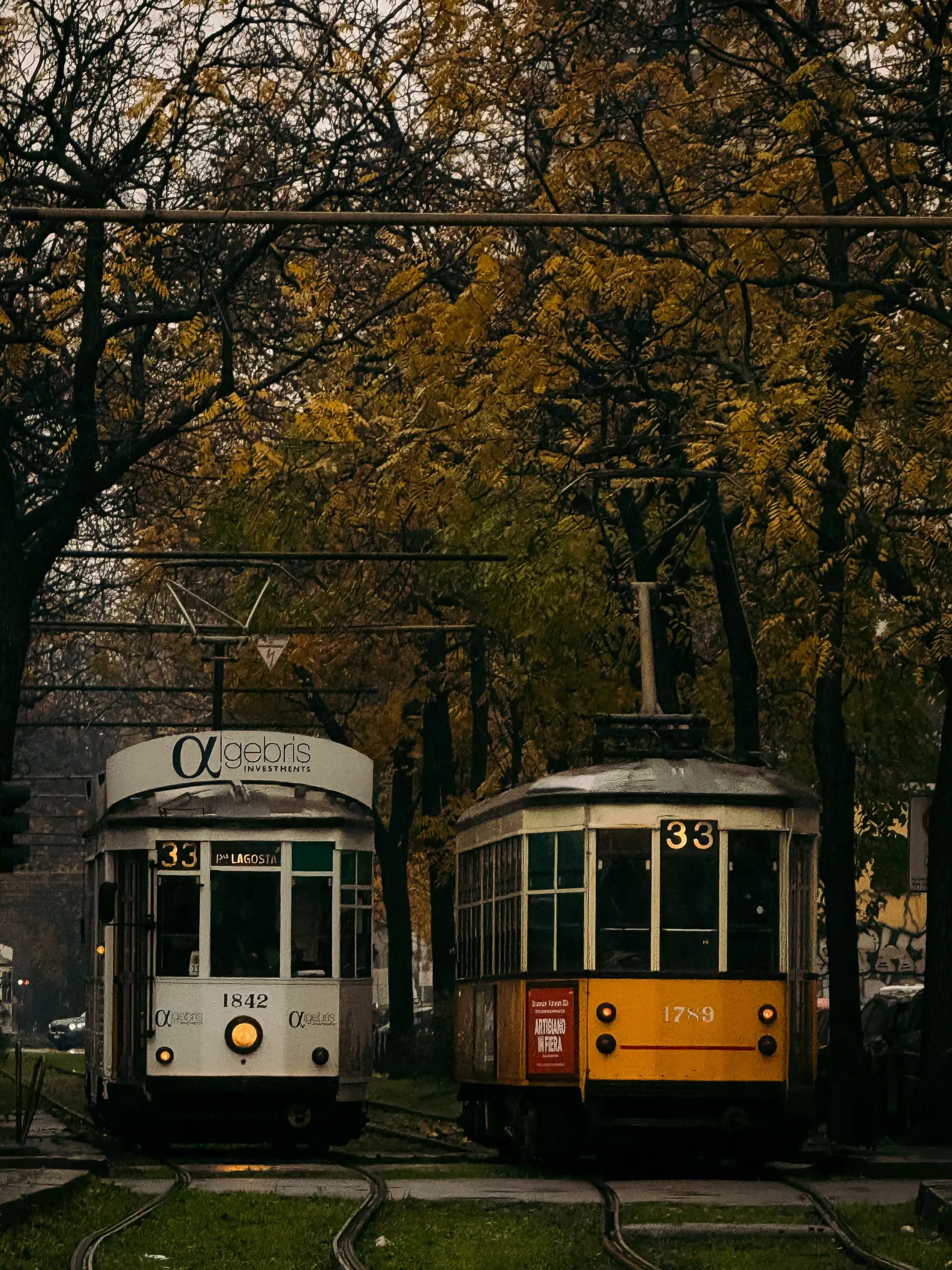
Meet the Ventotto
Its official name is the ATM Series 1500, but that is rather like referring to Sophia Loren by her tax code.
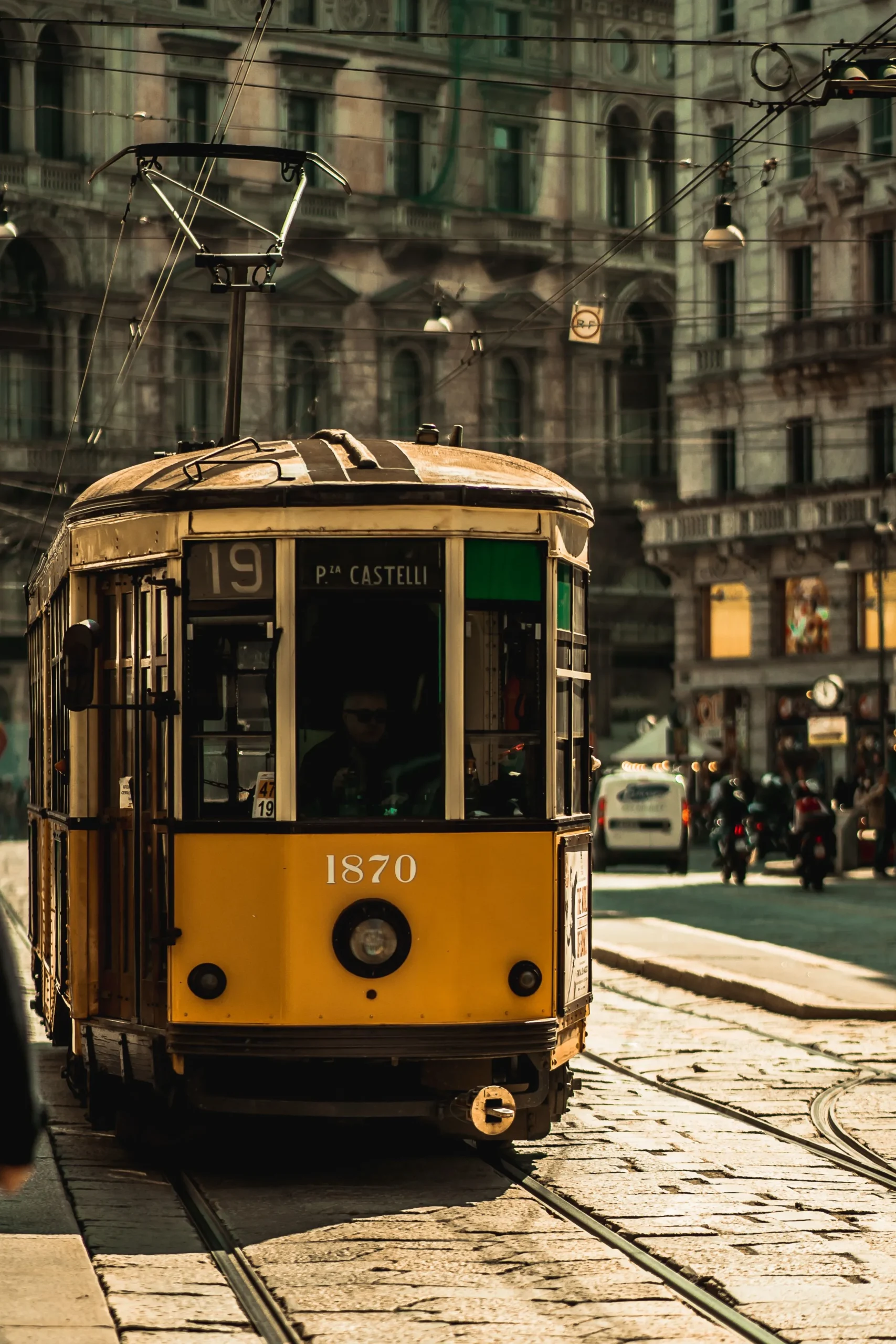
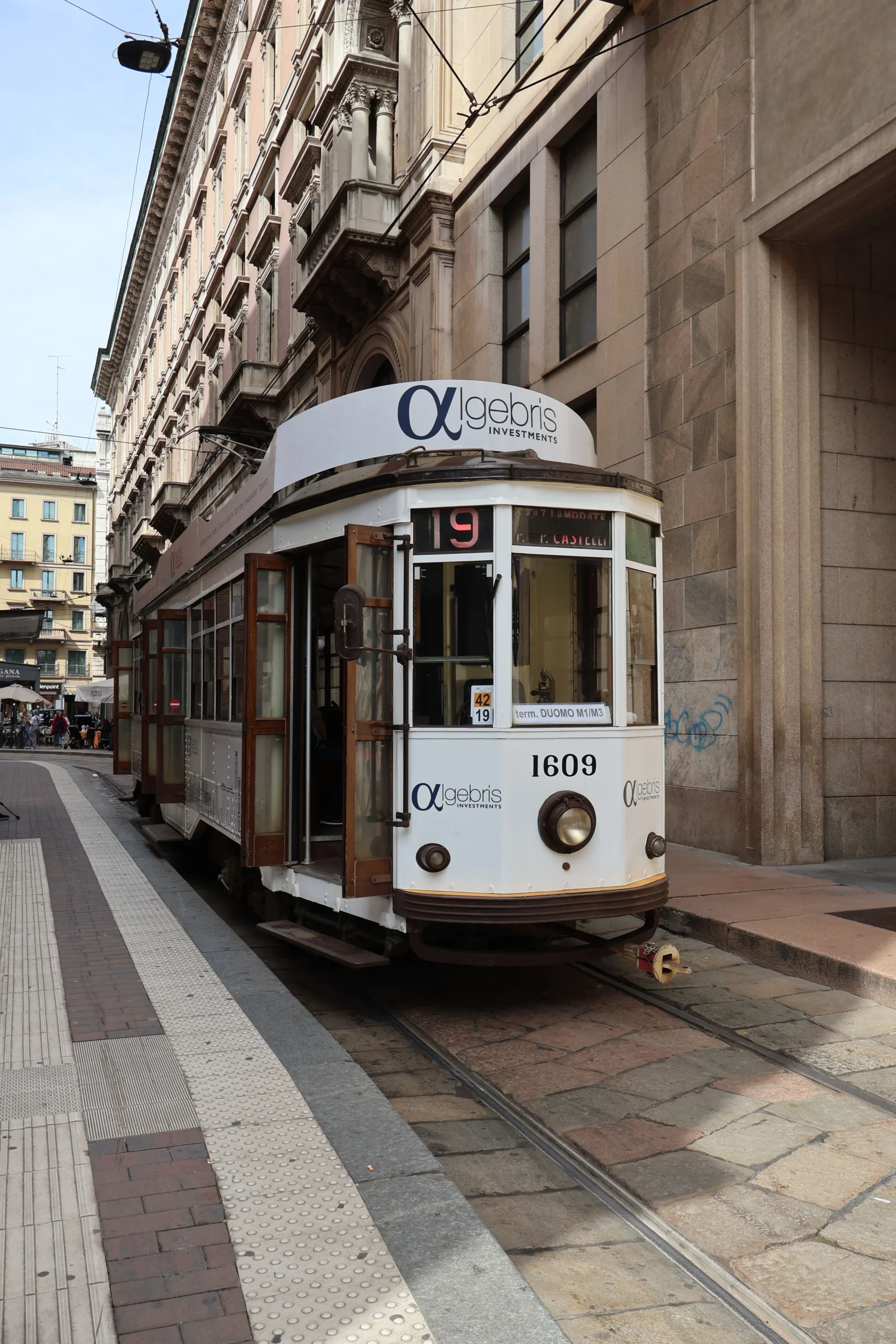
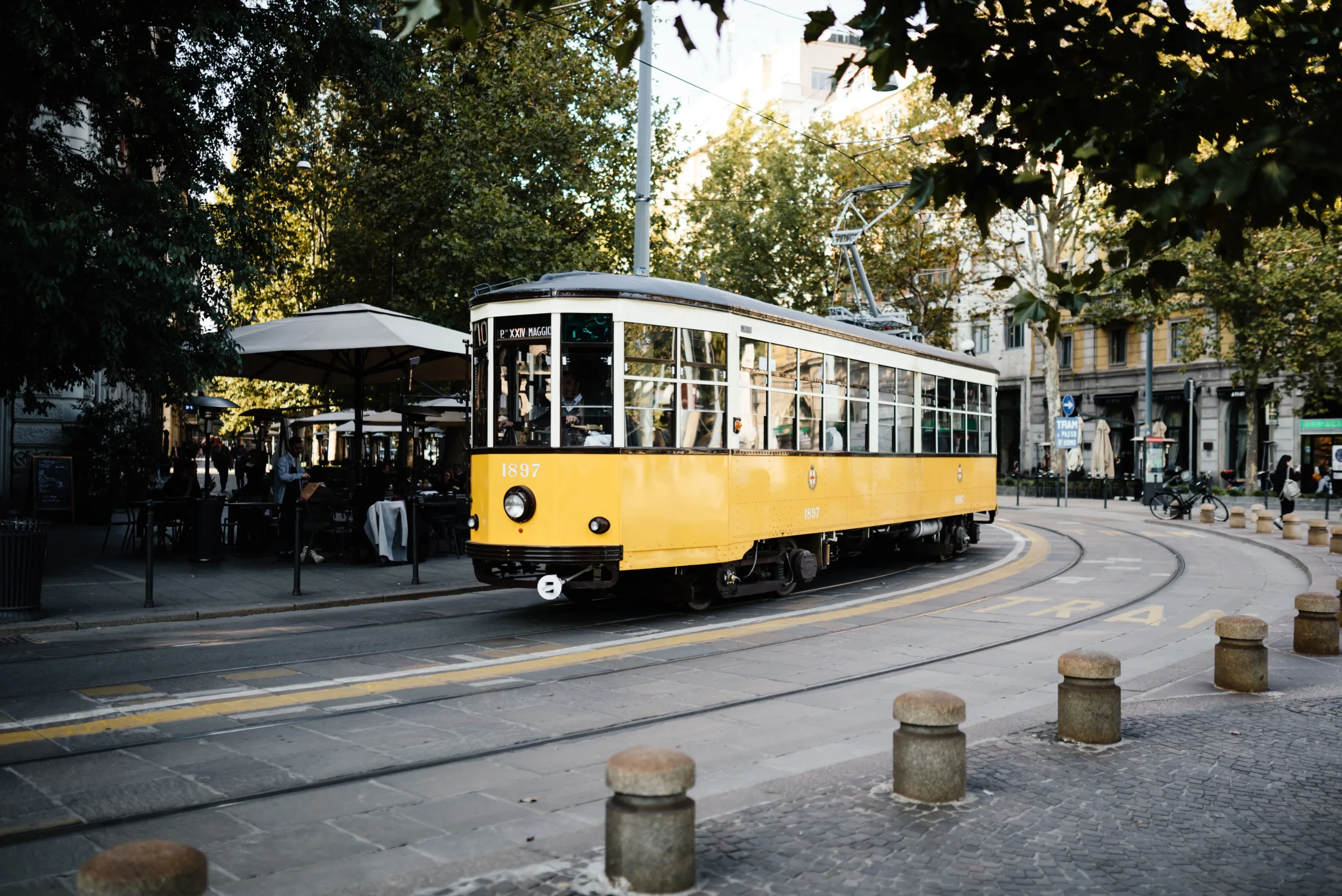
The Milanese know these trams as the Carrelli, the Milano 1928 or, most affectionately, the Ventotto — the Twenty-Eight.
The first prototype was completed in 1927. The new tram was developed by engineers working for Milan’s transport system after studying the innovative streetcars designed around the ideas of Cleveland transport commissioner Peter Witt in the United States. Production continued until 1930, with 502 examples built in total.
At the time, there was nothing quaint about them. They represented modern urban transport.
Their two bogies — the carrelli that gave the trams one of their nicknames — supported a long steel body capable of carrying large numbers of passengers. A Ventotto is almost 14 metres long, weighs around 15 tonnes empty and was designed to carry up to 125-130 people.
Nearly a century later, a remarkable number have survived.
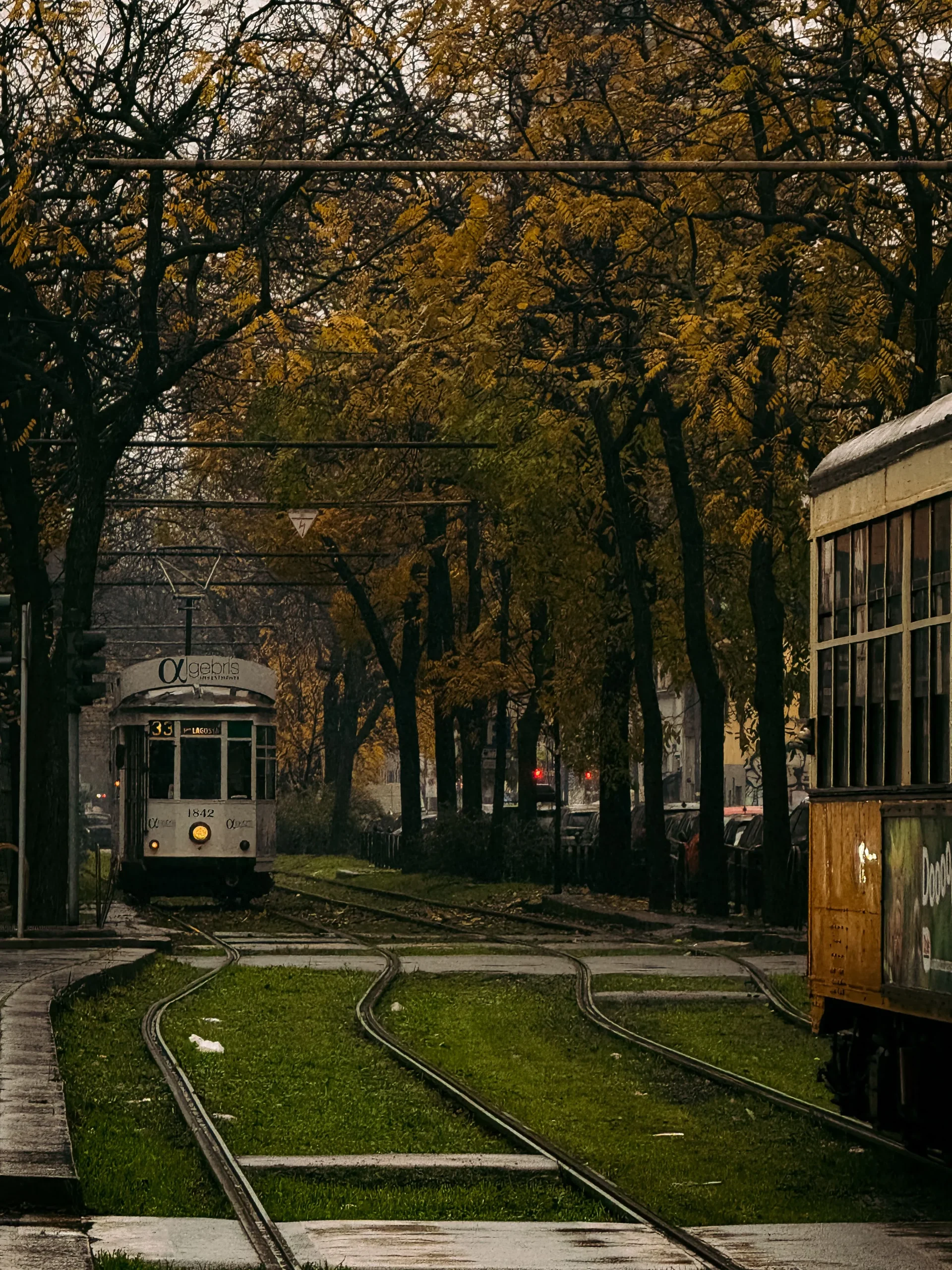
A 2024 dossier published by Milan’s Museo Nazionale Scienza e Tecnologia recorded 125 Carrelli still in regular public transport service, then assigned to lines 1, 5, 10, 19 and 33.
So if you see a Ventotto approaching, don’t assume you’ve stumbled across a heritage excursion.
It may simply be taking somebody to the office.
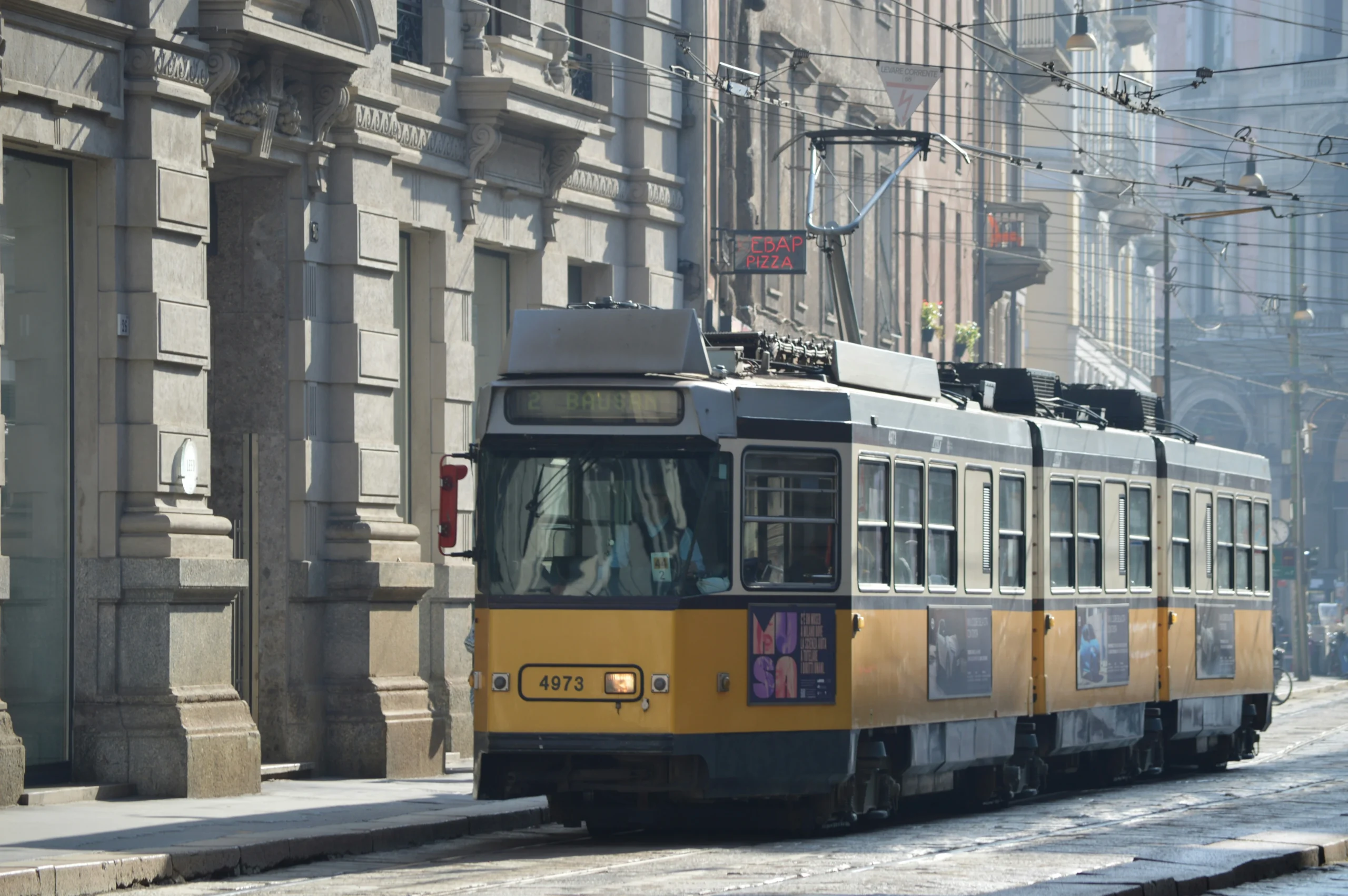
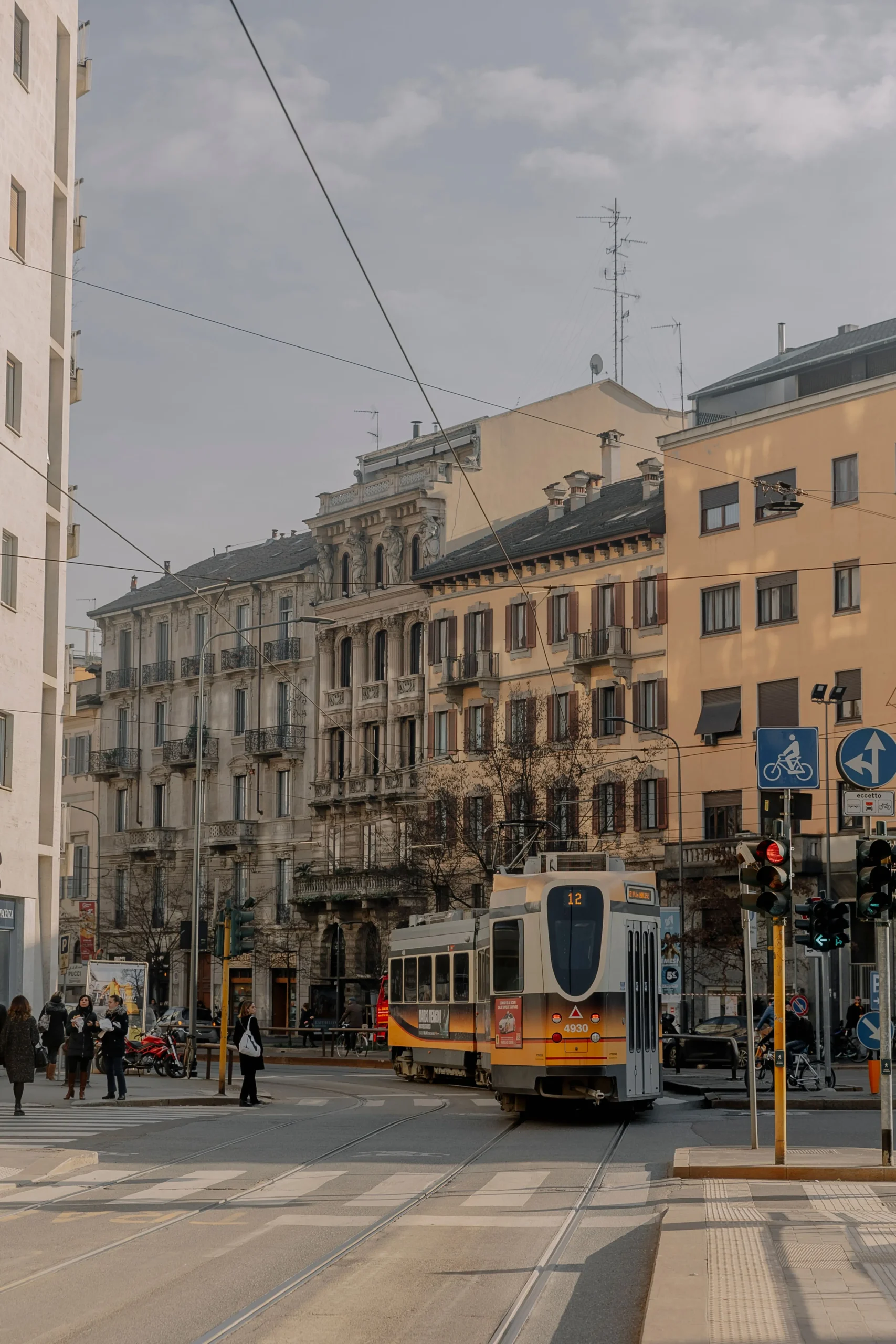
Not all trams in Milan are old
The Ventotto may be the photogenic star of the family, but Milan’s tram network is not a rolling museum.
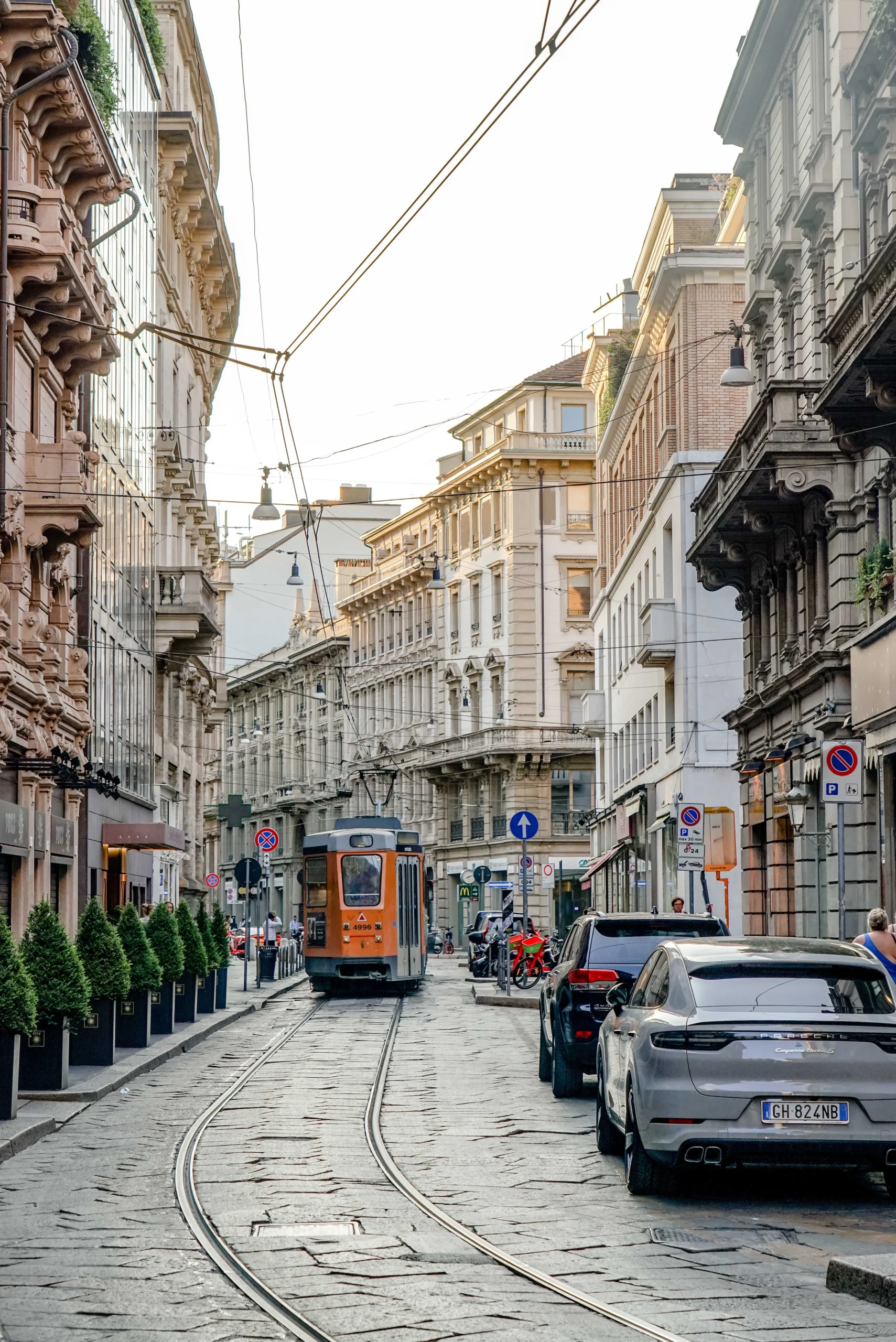
Different generations of trams share the streets, from post-war vehicles and articulated cars to modern low-floor trams designed for contemporary accessibility, capacity and passenger comfort. The result is a rather wonderful moving timeline of Milanese public transport: vehicles separated by decades can appear on the same city streets.
Today, ATM (Milan’s public transport company) operates 17 tram lines across a network of approximately 157 kilometres.
That makes the tram far more than a nostalgic presence. It remains part of Milan’s everyday transport system, carrying residents across the centre and out through neighbourhoods far removed from the postcard version of the city.
The newer trams are quieter, smoother and more accessible (and considerably longer).
The old ones have other talents.
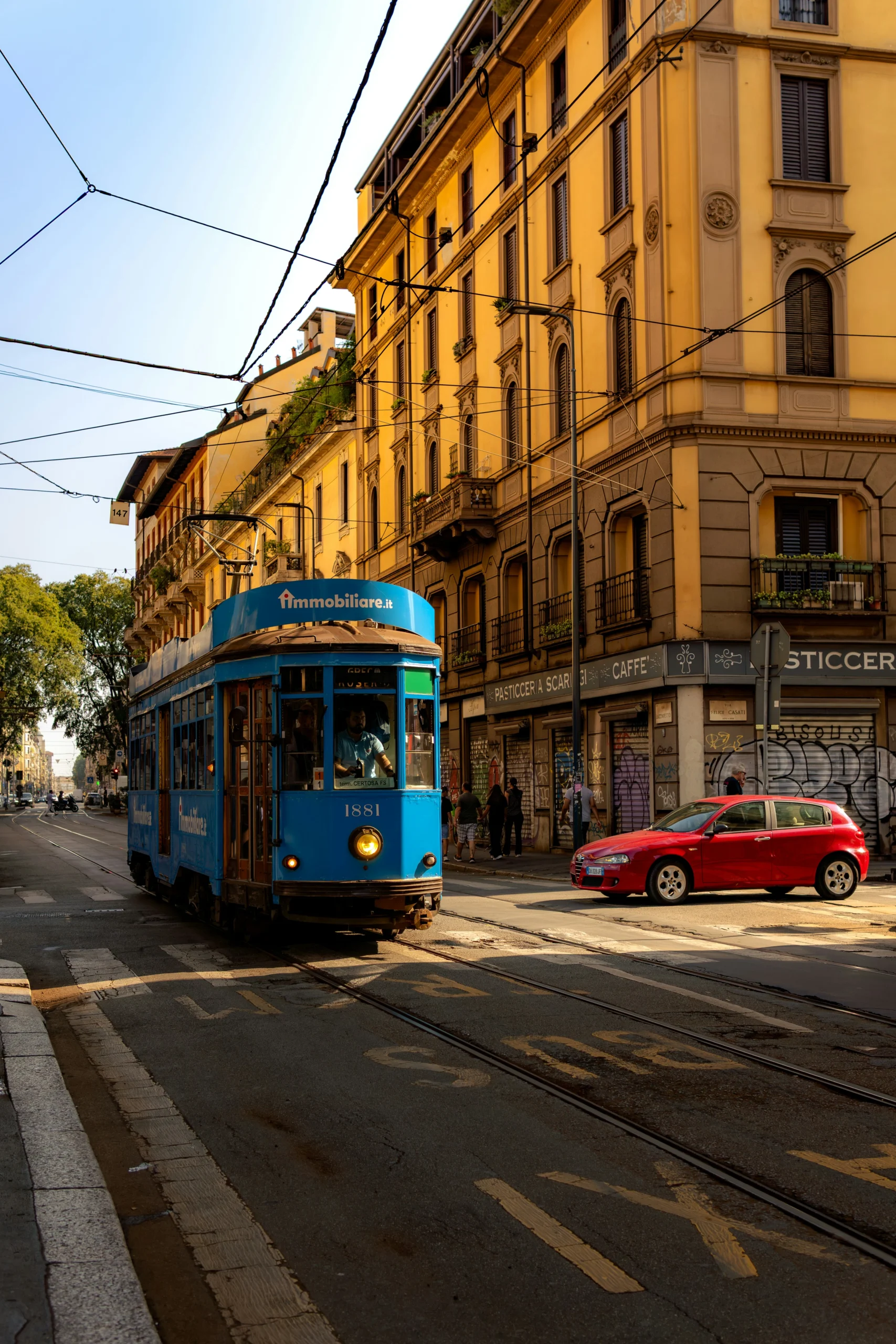
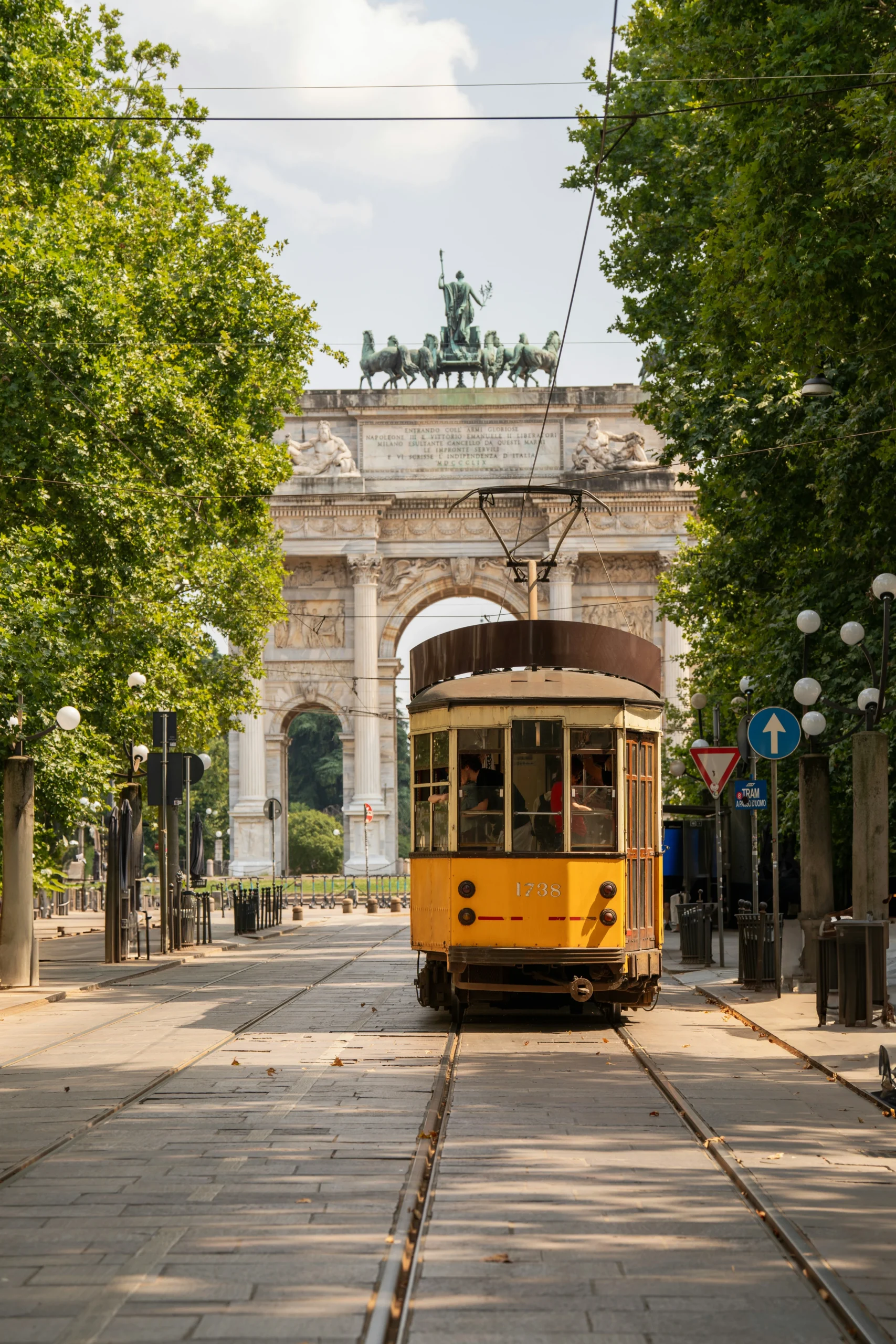
The soundtrack of Milan
A Ventotto is not discreet.
This is part of its charm.
Modern public transport tends to glide and hum. The old Milan trams prefer to announce themselves.
For people who have lived in the city for years, these noises become part of the background. You barely register them.
Until you spend time somewhere without trams.
Then something is strangely missing.
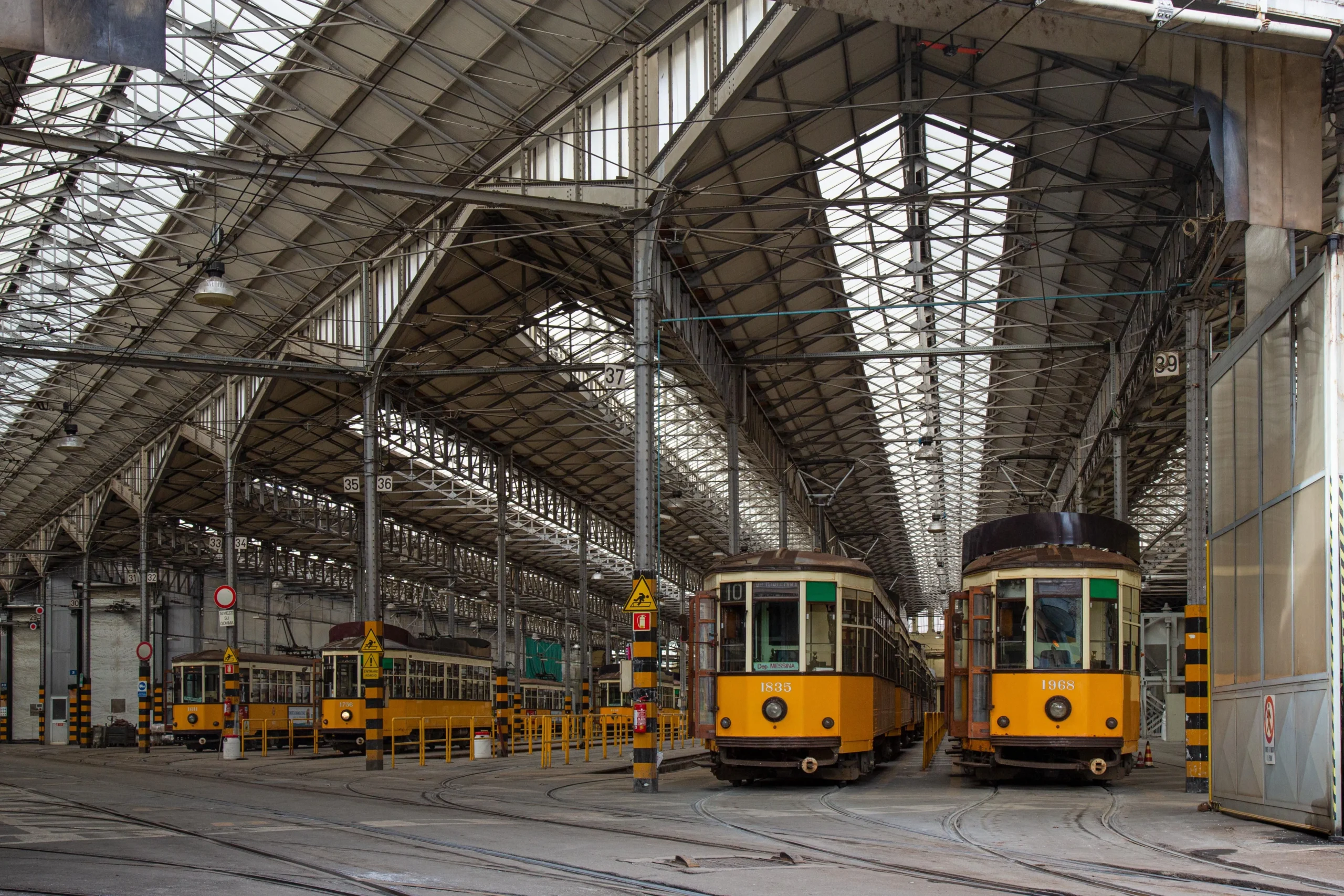
The Ventotto has changed its clothes
Although the basic shape is instantly recognisable, the Ventotto has not remained frozen in 1928.
Its appearance and equipment have evolved during almost a century of service. The cars have worn different liveries over the decades, including combinations associated with their early years, the familiar green of a later period and the orange that became strongly associated with Milanese public transport from the 1970s.
Their technology changed too.
Originally, the trams collected electricity from the overhead wire using a trolley pole known in Milanese as the perteghetta. This was later replaced by the pantograph familiar today.
The layout was modified as well. The early cars originally had two doors; a third was subsequently introduced to improve the movement of passengers.
And there is one feature of the original trams that seems particularly startling now: at one time, part of the carriage was reserved for smokers.
Yes, you could sit on public transport and smoke.
The past really is another country.
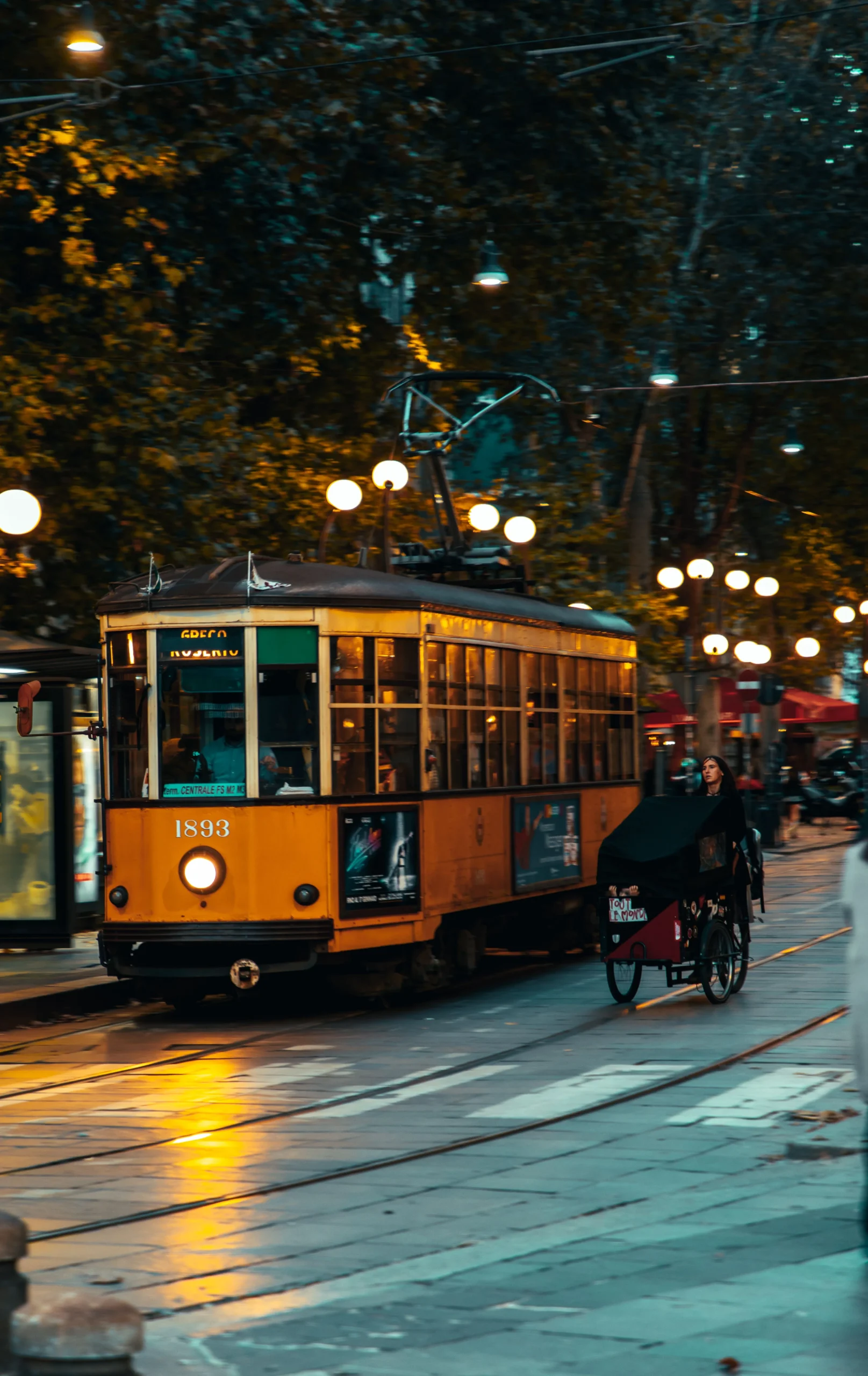
Built to survive
The Ventotto did not reach old age by spending its life in gentle conditions.
During the Second World War, Milan suffered devastating aerial bombardment, particularly in 1943. Trams and transport infrastructure were among the many things damaged.
A number of the Series 1500 cars were badly hit, but their robust steel construction meant that many could be repaired or rebuilt after the war.
Over the decades, the surviving trams were repeatedly adapted, maintained and modernised sufficiently to remain useful.
Which may be the simplest explanation for their extraordinary longevity.
They were built to last.
They appear to have taken the instruction personally.
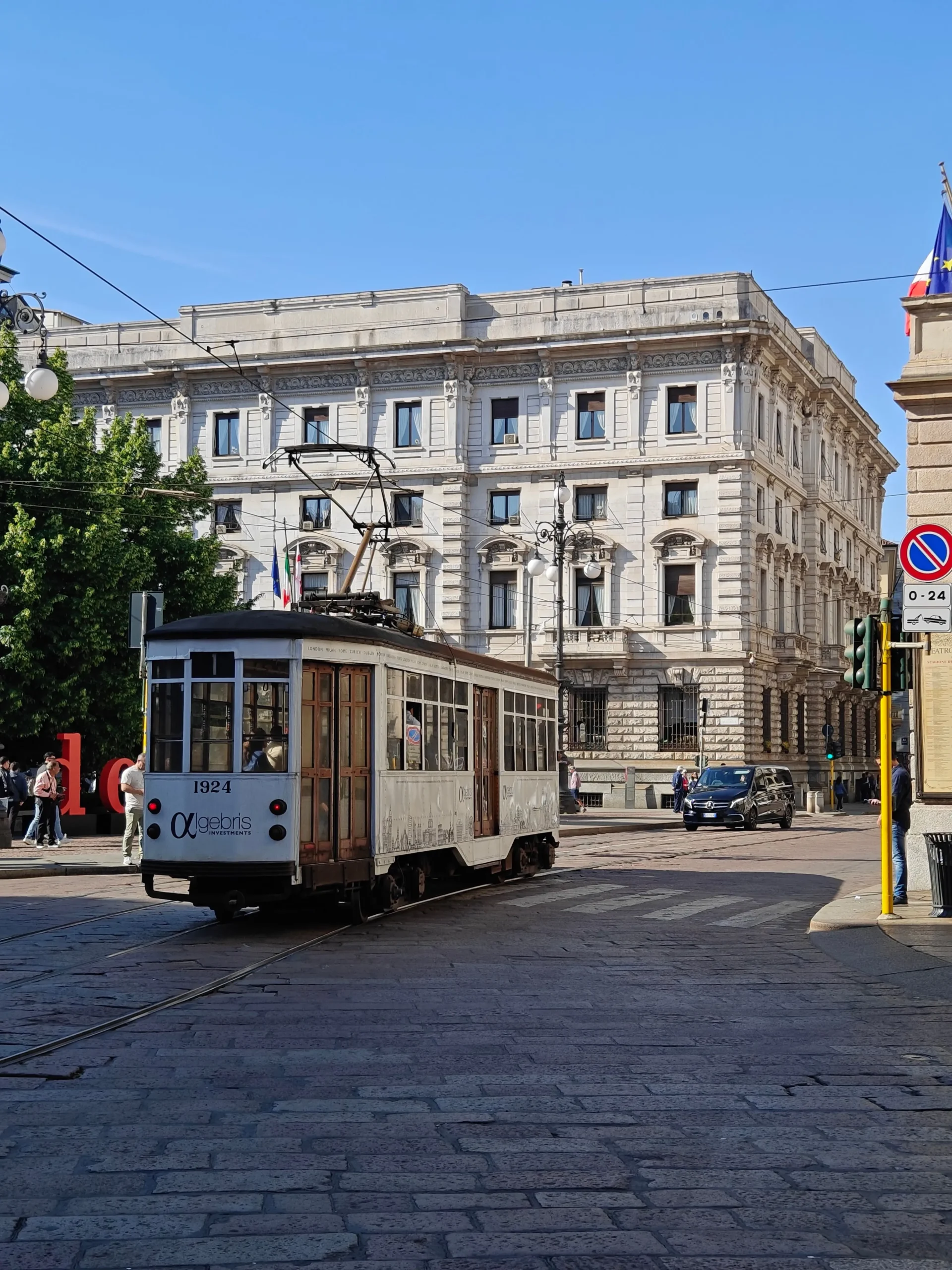
From America to Milan — and back again
The Ventotto story has a pleasingly circular geography.
Its design was inspired by the Peter Witt streetcars developed in the United States. Milan took that American idea and created a tram that became thoroughly, unmistakably Milanese.
Then, decades later, some of those Milanese trams crossed the Atlantic in the opposite direction.
In 1998, San Francisco’s Muni acquired 11 Milan-built Peter Witt cars for its historic streetcar fleet. They became an important part of service on the city’s F Market & Wharves line.
San Francisco’s transport authority describes the cars as retaining their handsome wooden interiors and appearing in liveries representing different periods of Milanese service.
There is, however, a small act of cultural vandalism.
The San Francisco cars have a horn rather than the traditional warning bell.
A Milan tram without its ding-ding?
We shall try to be broad-minded.
So the story travelled from Cleveland to Milan and eventually from Milan to San Francisco: an American transport idea transformed into a Milanese icon and then exported back to America.
Not bad for a tram.
A city obsessed with the new — riding around in the old
Perhaps this is why the trams in Milan matter beyond public transport.
Milan likes new things.
New buildings, new neighbourhoods, new restaurants, new collections, new technology, new ways of doing things. Reinvention is practically a municipal hobby.
Yet the city has kept its oldest trams running.
Not behind velvet ropes. Not exclusively for tourists. Not polished into irrelevance in a transport museum.
Running.
A Ventotto can rattle past a glass tower, a fashion boutique or a piece of contemporary architecture and carry on down the street as though the last hundred years were merely an interesting development.
And around it, the rest of Milan’s tram fleet continues to evolve. Old and new coexist on the same network: one tram recalling the city your grandparents knew, the next belonging unmistakably to the 21st century.
There are faster ways to cross Milan. There are quieter ones. There are certainly smoother ones.
But few things feel quite as much like Milan as sitting inside an old tram while it clatters over the rails, hearing the bell sound ahead and watching the city pass through the windows.
The Ventotto will celebrate its centenary very soon.
It will presumably mark the occasion in the traditional Milanese manner: by going to work.
If you enjoyed this post, you might also like:
Picturesque hidden courtyards in the Navigli district you’ll love checking out
This post was all about trams in Milan — from the much-loved Ventotto to the sounds, stories and history that keep the city moving.
Photo credits: Pexels and Unsplash