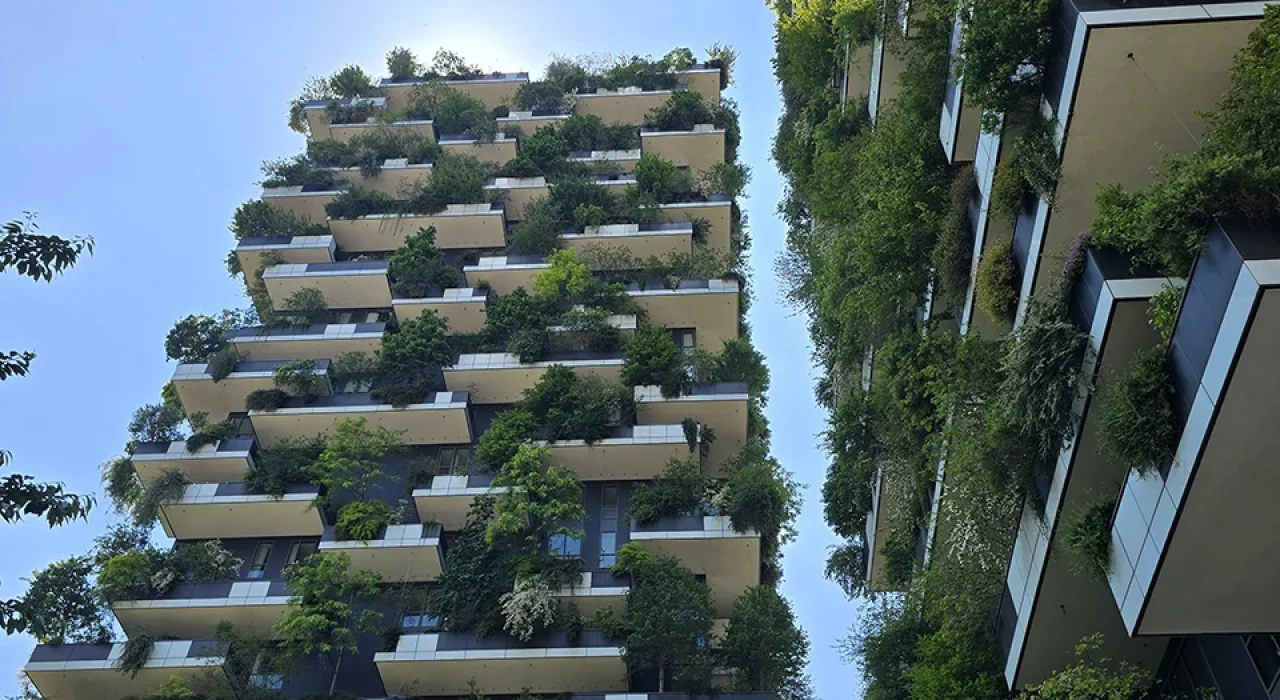
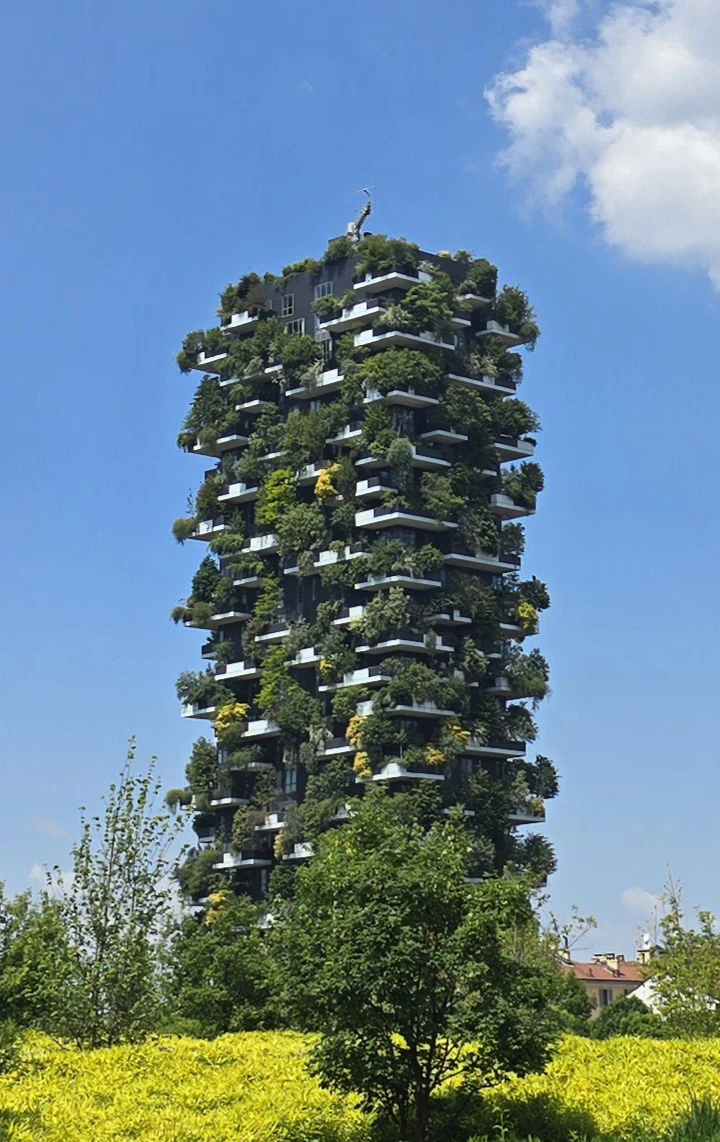
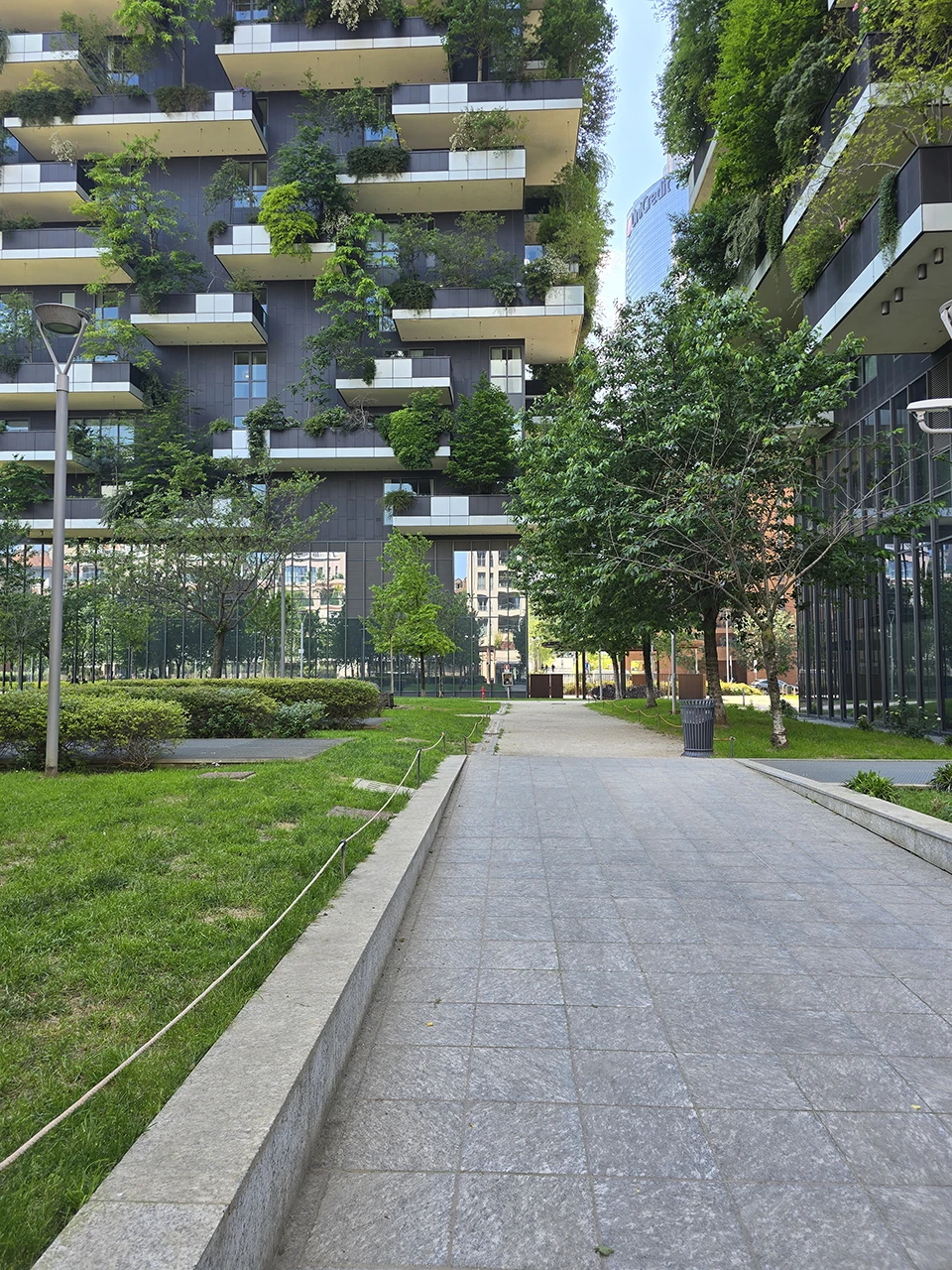
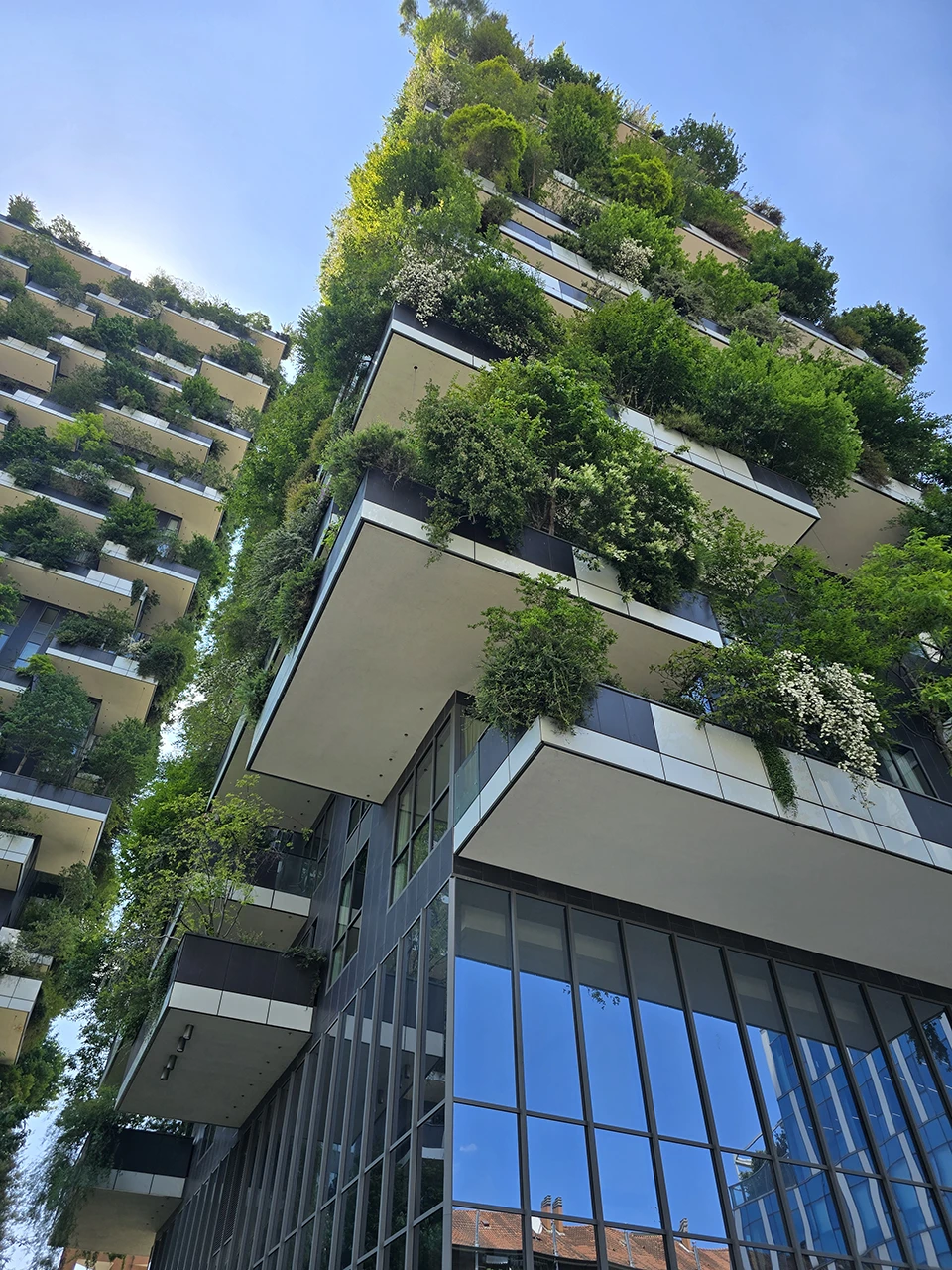
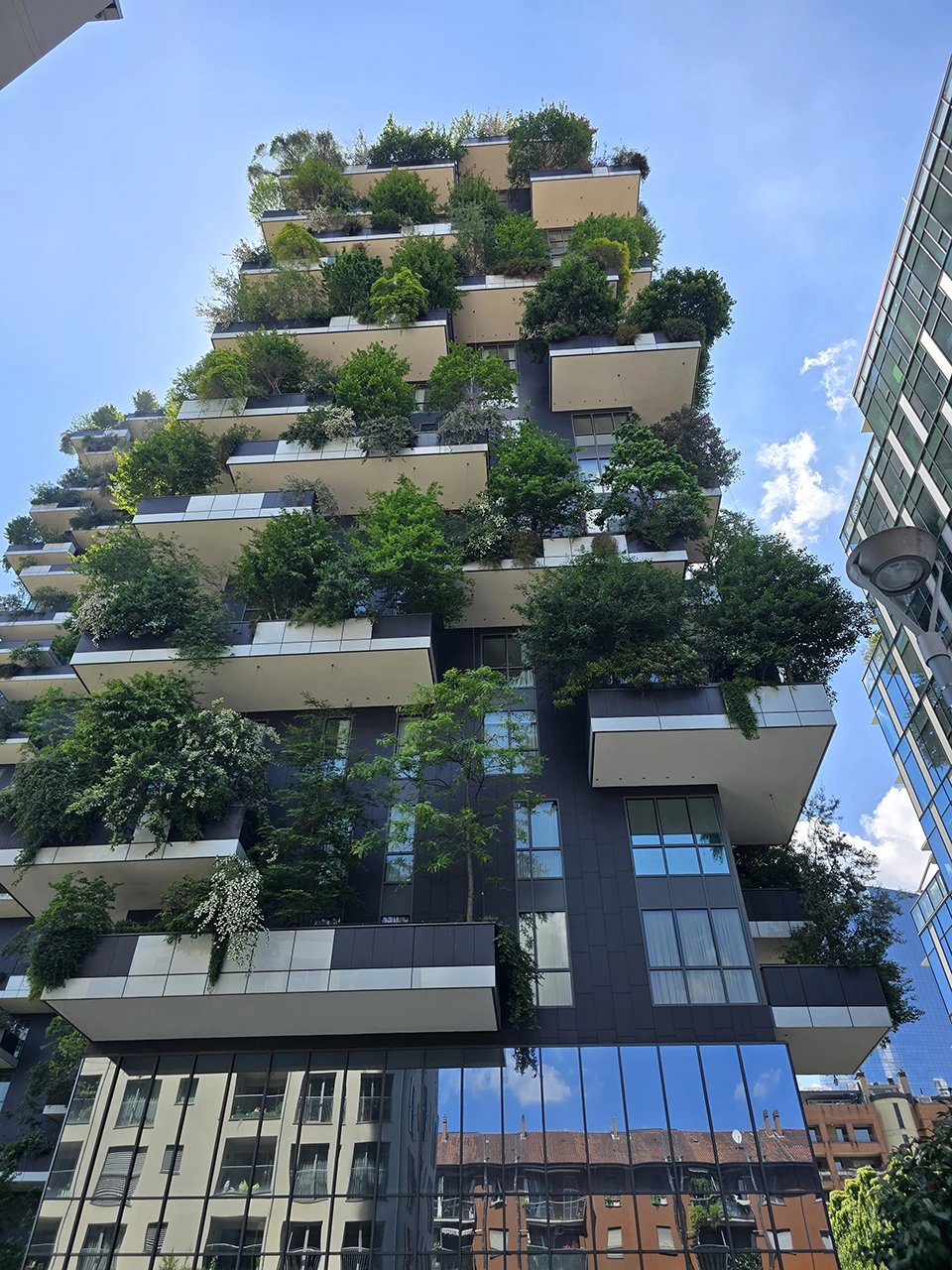
Concentrated on 3,000 square metres of urban surface, the Vertical Forest houses a total of 800 trees (15,000 perennials and/or ground covering plants and 5,000 shrubs): an amount of vegetation that corresponds to 30,000 square metres of woodland and undergrowth. Right in the centre of the city, which is pretty amazing!
The botanical component of the Vertical Forest was devised and created by a group of botanists and ethologists, who spent three years conducting studies aimed at selecting and growing plants destined to be installed in the towers.
The plants were cultivated in a special botanical “nursery” near Como (a town near Milan), so that they would get used to living in similar conditions to those of their future “homes”.
But there’s more.
The Vertical Forest also contributes to limiting the urban sprawl. In fact, each tower is the equivalent of 50,000 square metres of single-family houses.
The towers’ most distinctive structural features are their spacious overhanging balconies, which can accommodate large external tubs for vegetation where trees can grow undisturbed and can even extend over three floors of the building.
The facades of the buildings mostly consist of a plant-based shield that filters the sun rays (instead of reflecting them as with glass or stone facades), creating a pleasant and relaxing microclimate. In addition, the green shield produces oxygen and absorbs carbon dioxide, with beneficial effects on the environment.
In fact, cities are responsible for more than 70% of global carbon dioxide emissions. Let’s not forget that carbon dioxide emissions, methane and other greenhouse gases contribute to global warming of the planet, with biodiversity loss, rising sea levels and ice melting.
Why are trees and forests so important for the protection of the environment? Because they can absorb almost 40% of fossil fuel emissions, mostly produced by cities. In fact, leaves and roots absorb carbon dioxide through photosynthesis.
This is why architectural projects like Milan’s Vertical Forest represent and promote an innovative concept of urban forestry.
The Vertical Forest ‒ project by Boeri Studio, and built between 2007 and 2014 ‒ received prestigious awards like the International Highrise Award from the Deutschen Architekturmuseums in Frankfurt (2014) and the CTBUH Award for the best tall building in the world from the Council for Tall Buildings and Urban Habitat at Chicago’s IIT (2015).
Where is the Vertical Forest located?
The two towers of the Vertical Forest are in Via Federico Confalonieri and Via Gaetano de Castillia, respectively, close to an area of Milan known as “Centro Direzionale” where you can admire some of the skyscrapers of the city’s skyline.
If you are into cutting-edge and sustainable architectural projects, aimed at contributing to the protection of the environment, you can’t miss the Vertical Forest.

Milan Vertical Forest
Via Gaetano de Castillia 11, Milan
Via Federico Confalonieri 15, Milan
This post was all about the Vertical Forest in Milan, a great example of sustainable architecture.