
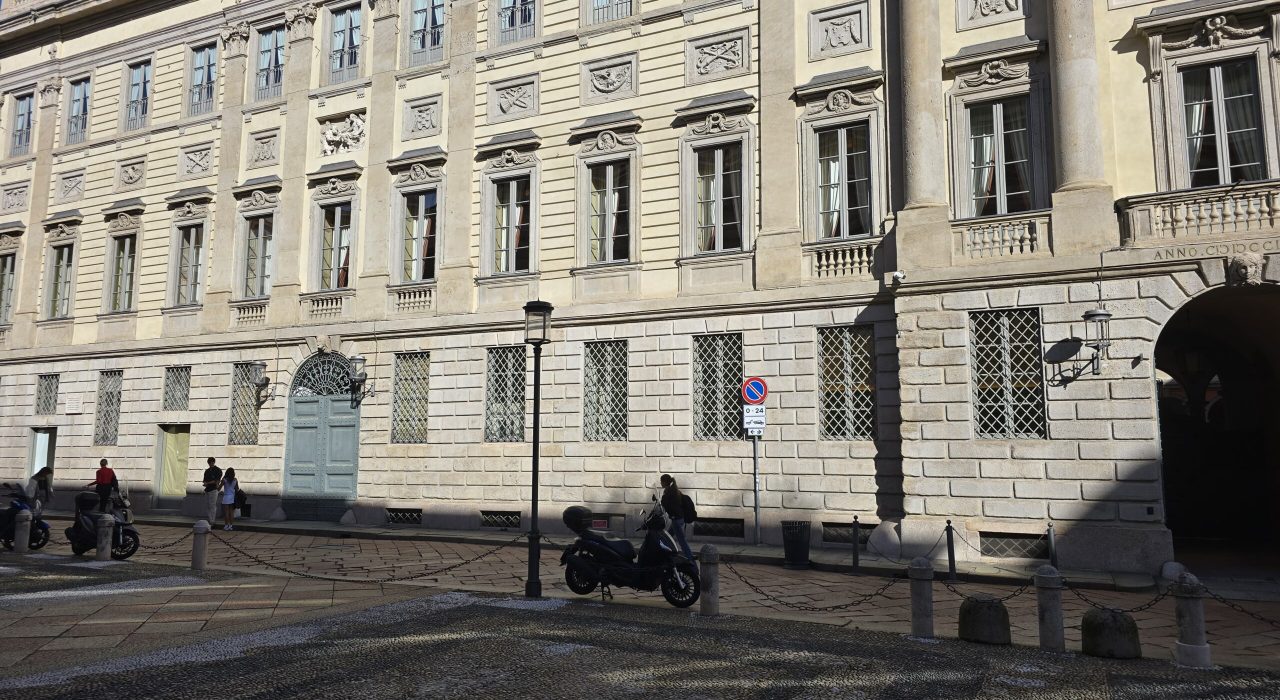
Among the hidden gems in Milan, Piazza Belgioioso stands out for its magnificent Neoclassical palaces, literary connections and fascinating stories of the people who helped shape the city’s history.
If you’re looking for hidden gems in Milan, Piazza Belgioioso deserves a place on your itinerary. Just a short walk from the Duomo and the fashionable streets of the city centre, this small, elegant square feels surprisingly removed from the bustle around it. There are no grand avenues or extravagant displays here. Instead, you’ll find beautiful architecture, centuries of history and the kind of understated charm that Milan does particularly well.
And although Piazza Belgioioso may be rather small, the personalities associated with it were anything but.
Palazzo Belgioioso: An Aristocratic Masterpiece
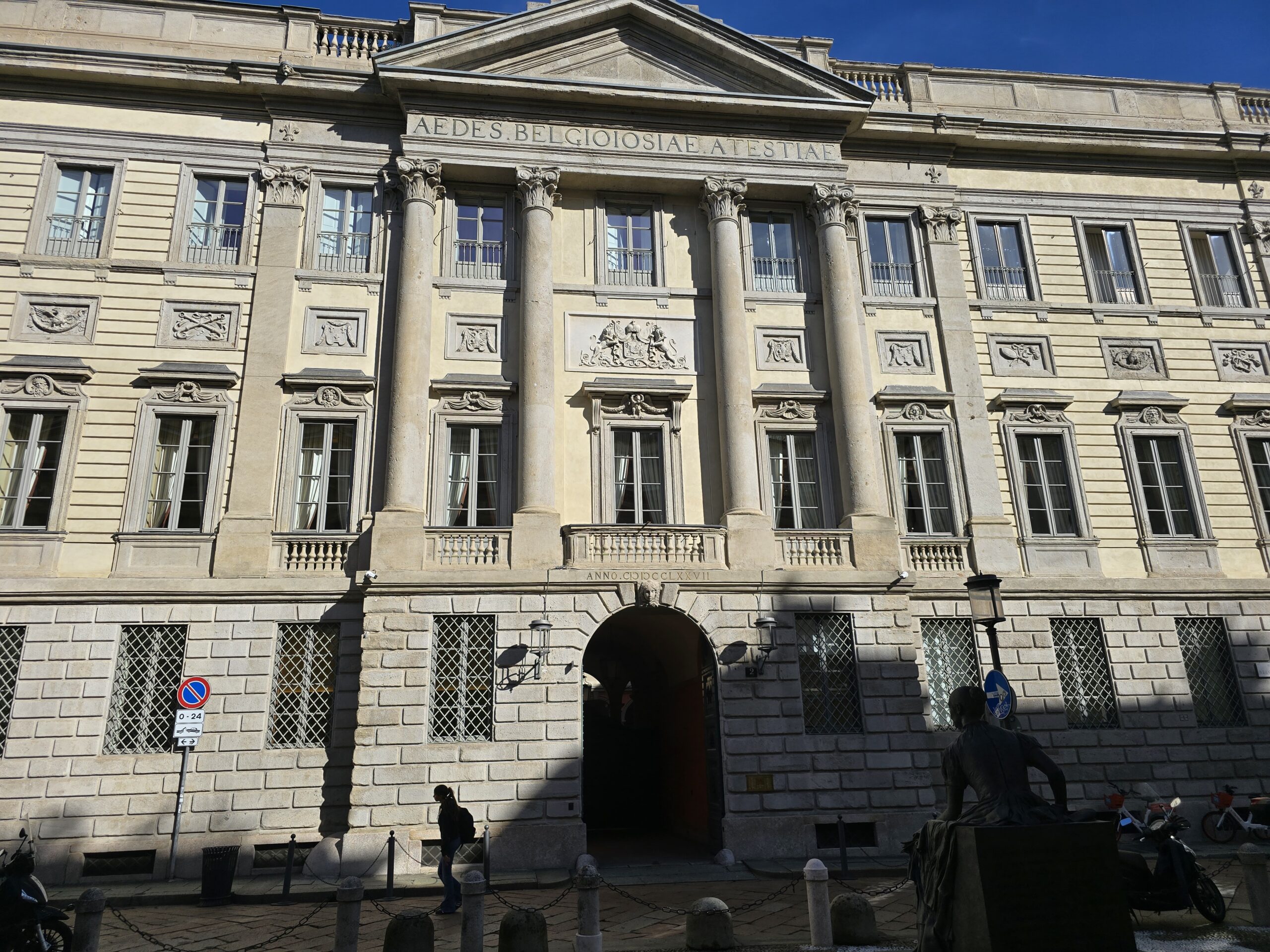
The undisputed star of the square is Palazzo Belgioioso, one of Milan’s finest examples of Neoclassical architecture.
Commissioned in 1772 by Alberico Barbiano di Belgioioso d’Este, a prominent aristocrat, the palace was designed by Giuseppe Piermarini, the celebrated architect who also designed Milan’s Teatro alla Scala.
Piermarini took inspiration from the Royal Palace of Caserta, creating an imposing yet remarkably harmonious façade. Look closely and you’ll notice the elegant columns, decorative reliefs and carefully balanced proportions that give the building its unmistakably aristocratic appearance.
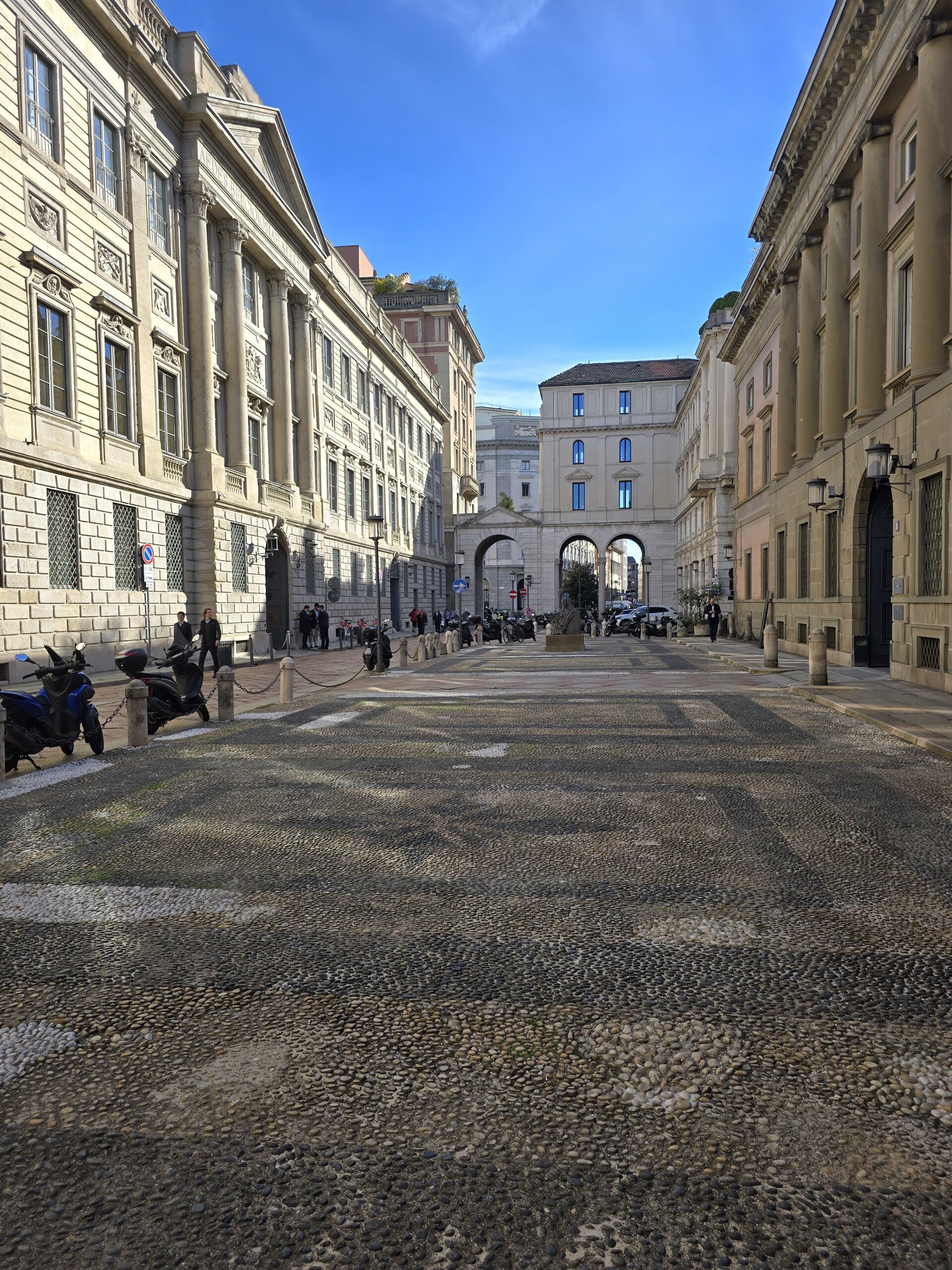
The palace was conceived together with the square in front of it, allowing its magnificent façade to be properly admired. Clearly, Alberico had no intention of hiding his architectural ambitions.
Inside, the decoration was equally impressive, with refined stuccoes and frescoes. The palace also contains a monumental staircase, beautiful reception rooms and a private chapel.
But Palazzo Belgioioso was much more than an elegant residence.
Alberico Barbiano di Belgioioso was an enthusiastic collector of books and works of art, and his home became an important meeting place for Milan’s intellectual and cultural elite.
It was a time when Milan was developing a new cultural identity, and aristocratic palaces were not simply places to live. They were also centres of conversation, ideas and influence.
Palazzo Belgioioso Today: Historic Rooms and Contemporary Art
Today, Palazzo Belgioioso is privately owned and accommodates residential and office spaces. However, part of its magnificent interior has recently been given a new cultural life.
In September 2025, the international contemporary art gallery Thaddaeus Ropac opened its Milan location on the palace’s piano nobile, or first floor.
The gallery occupies approximately 280 square metres, including two beautifully restored historic rooms that once formed part of the palace’s library. Rather than concealing their architectural character, the restoration has preserved the decorative details that make these spaces so remarkable.
The gallery is open to the public during exhibitions, offering visitors a rare opportunity to experience part of the palace’s interior.
For information:
www.lombardiabeniculturali.it – Lombardy’s cultural heritage website, with historical and architectural information about Palazzo Belgioioso.
Casa Manzoni: Where Literature Became History
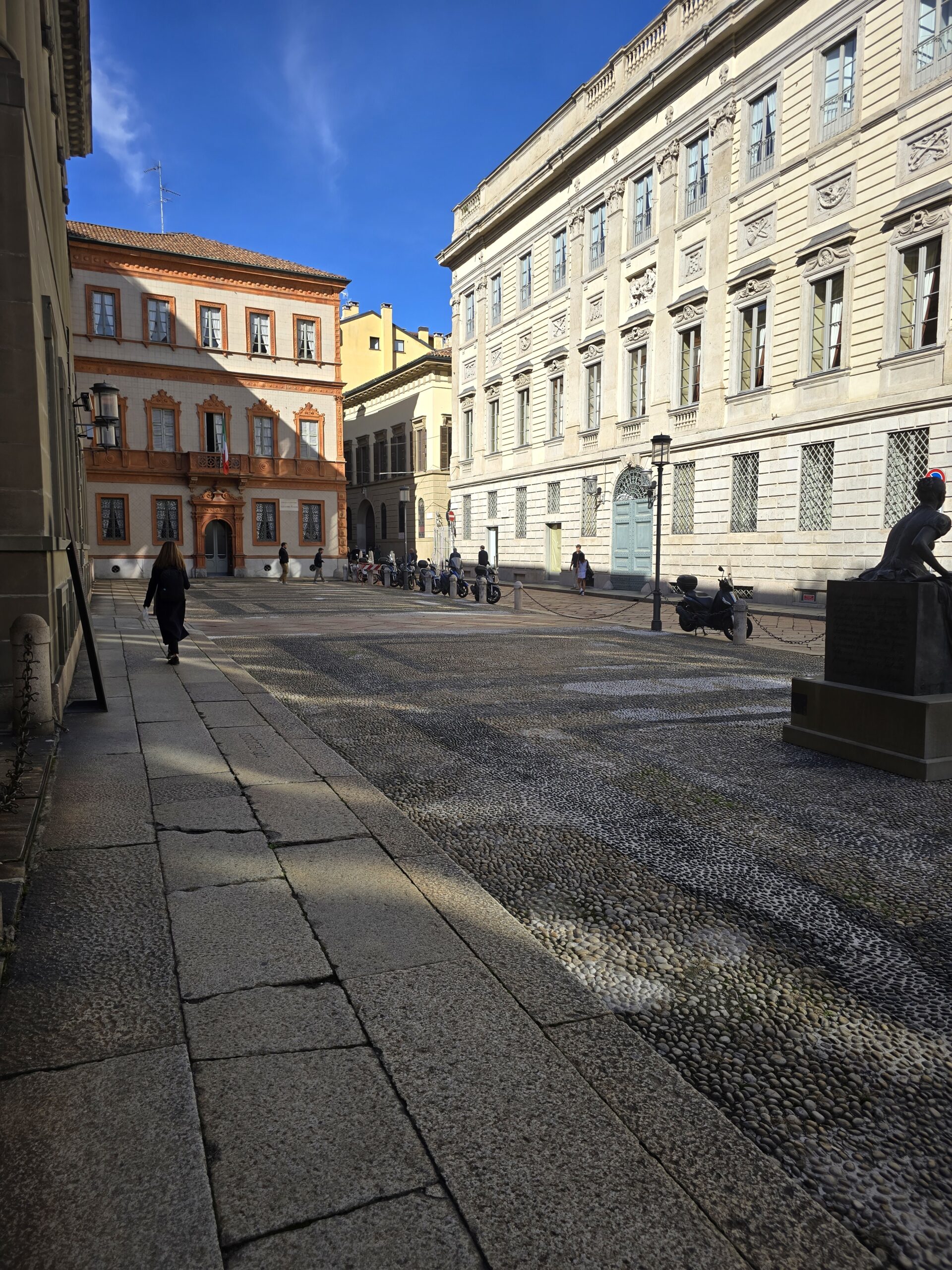
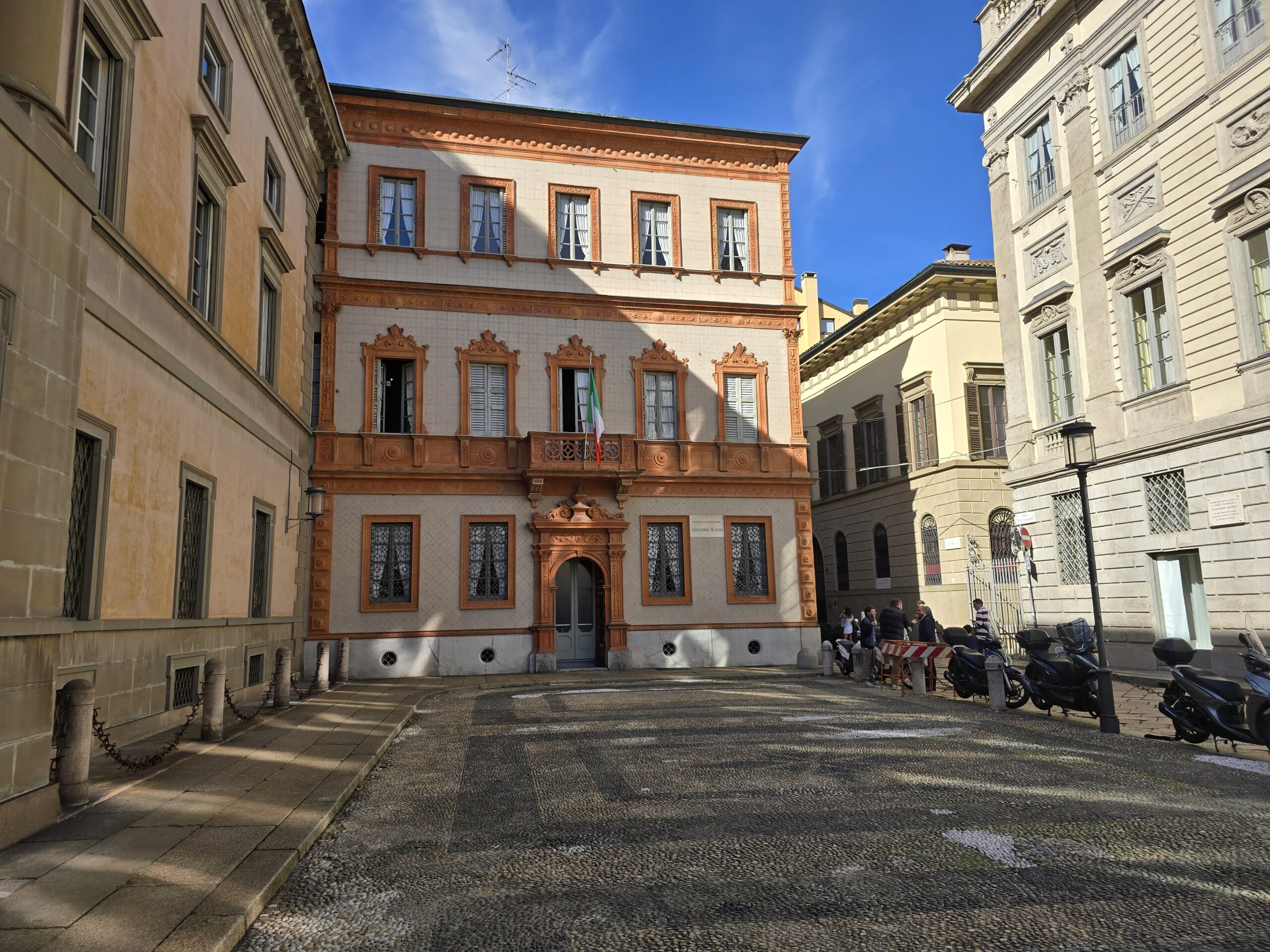
At the corner of Piazza Belgioioso and Via Morone stands another building of enormous importance to Milan: Casa Manzoni.
This was the home of Alessandro Manzoni, one of Italy’s greatest writers and the author of I Promessi Sposi (The Betrothed), a novel that occupies a central place in Italian literature.
Manzoni purchased the house in 1813 and lived here with his family from 1814 until his death in 1873.
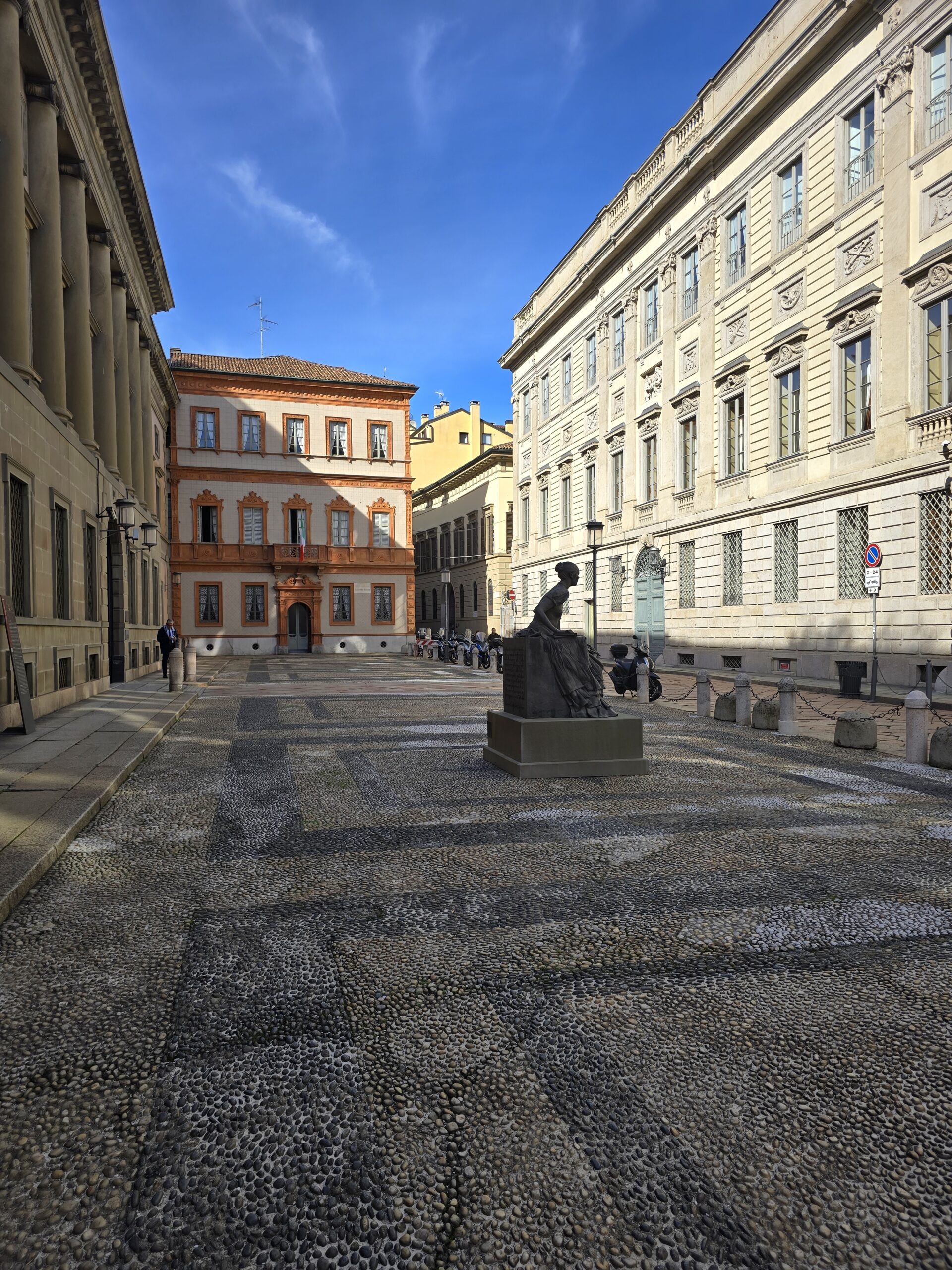
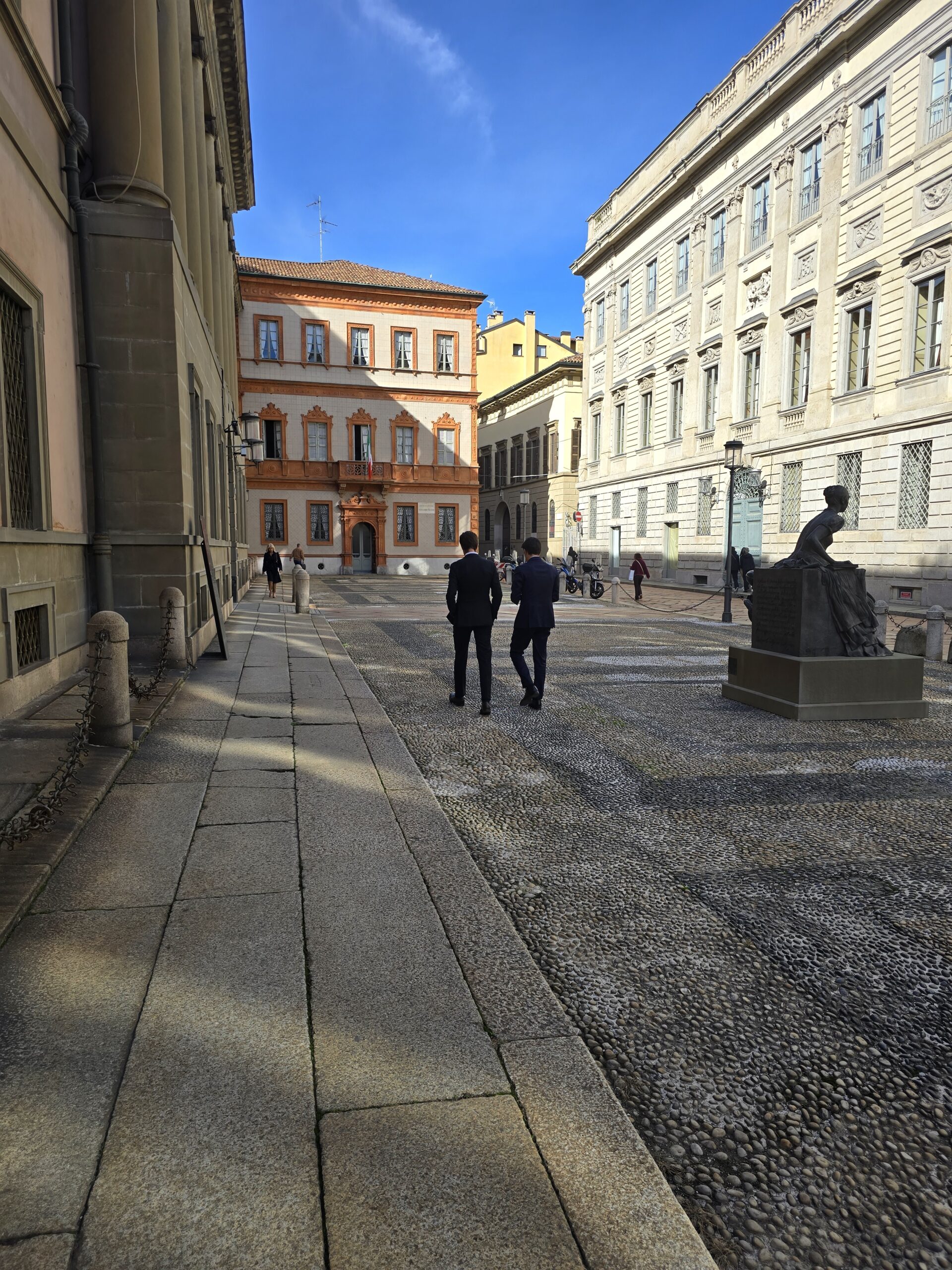
Its richly decorated façade, remodelled in the nineteenth century, is quite different from the severe elegance of the neighbouring Neoclassical palaces. Inspired by the Lombard Renaissance, it features ornamental details that make it particularly attractive.
Inside, Manzoni wrote, worked and welcomed some of the leading intellectual and cultural figures of his time. Among his visitors were Giuseppe Garibaldi and Giuseppe Verdi.
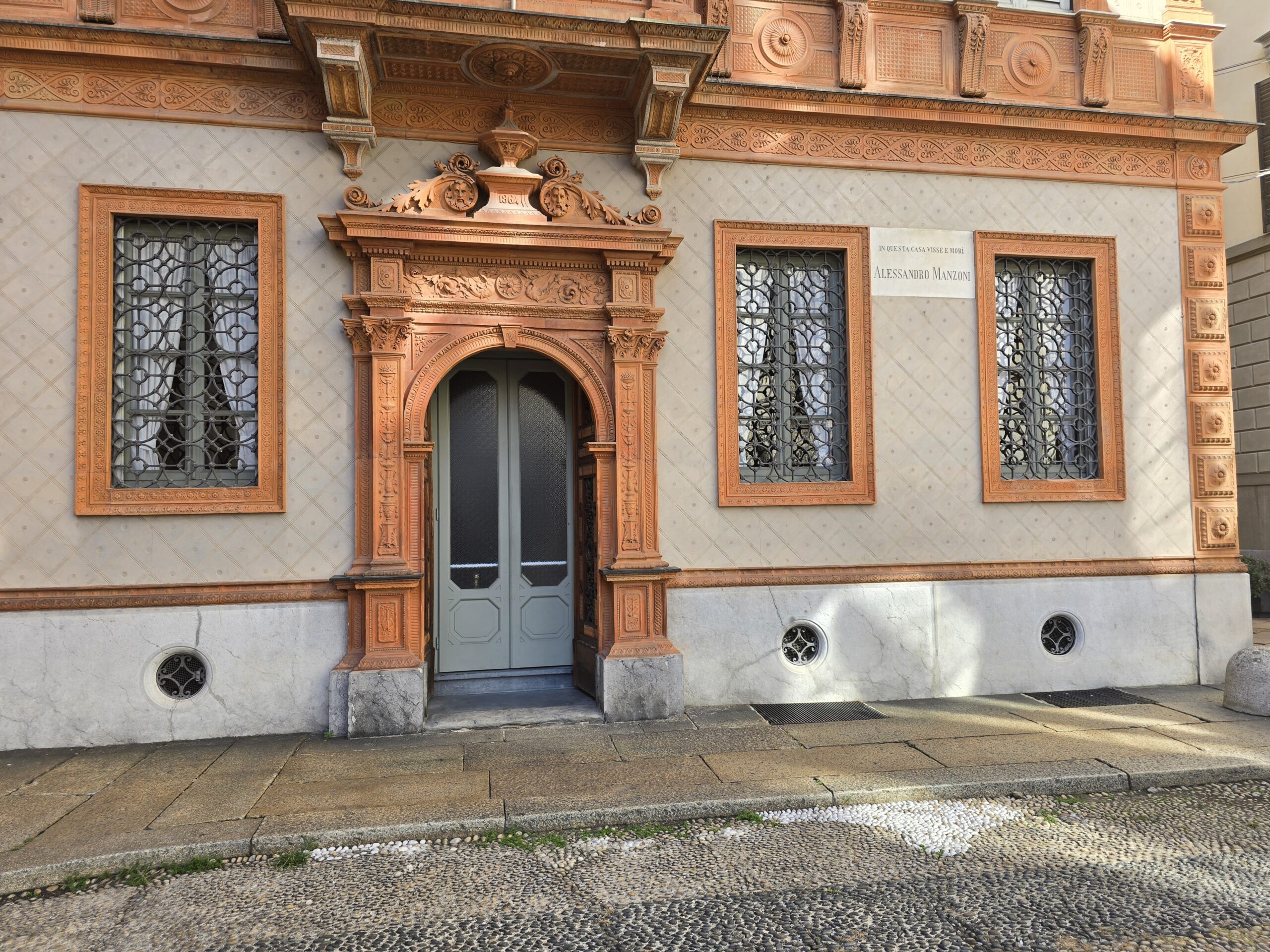
Today the house is a museum, offering visitors the opportunity to discover the writer’s private world, including his study and personal belongings.
For anyone interested in Italian history and literature, it’s a particularly rewarding visit. Even if you haven’t read The Betrothed, the house offers a fascinating glimpse into nineteenth-century Milan.
For information:
www.casadelmanzoni.it – Information about the museum, opening hours, admission fees and reservations.
Palazzo Besana: Another Side of Neoclassical Milan
Palazzo Belgioioso may command most of the attention, but it isn’t the only architectural treasure overlooking the square.
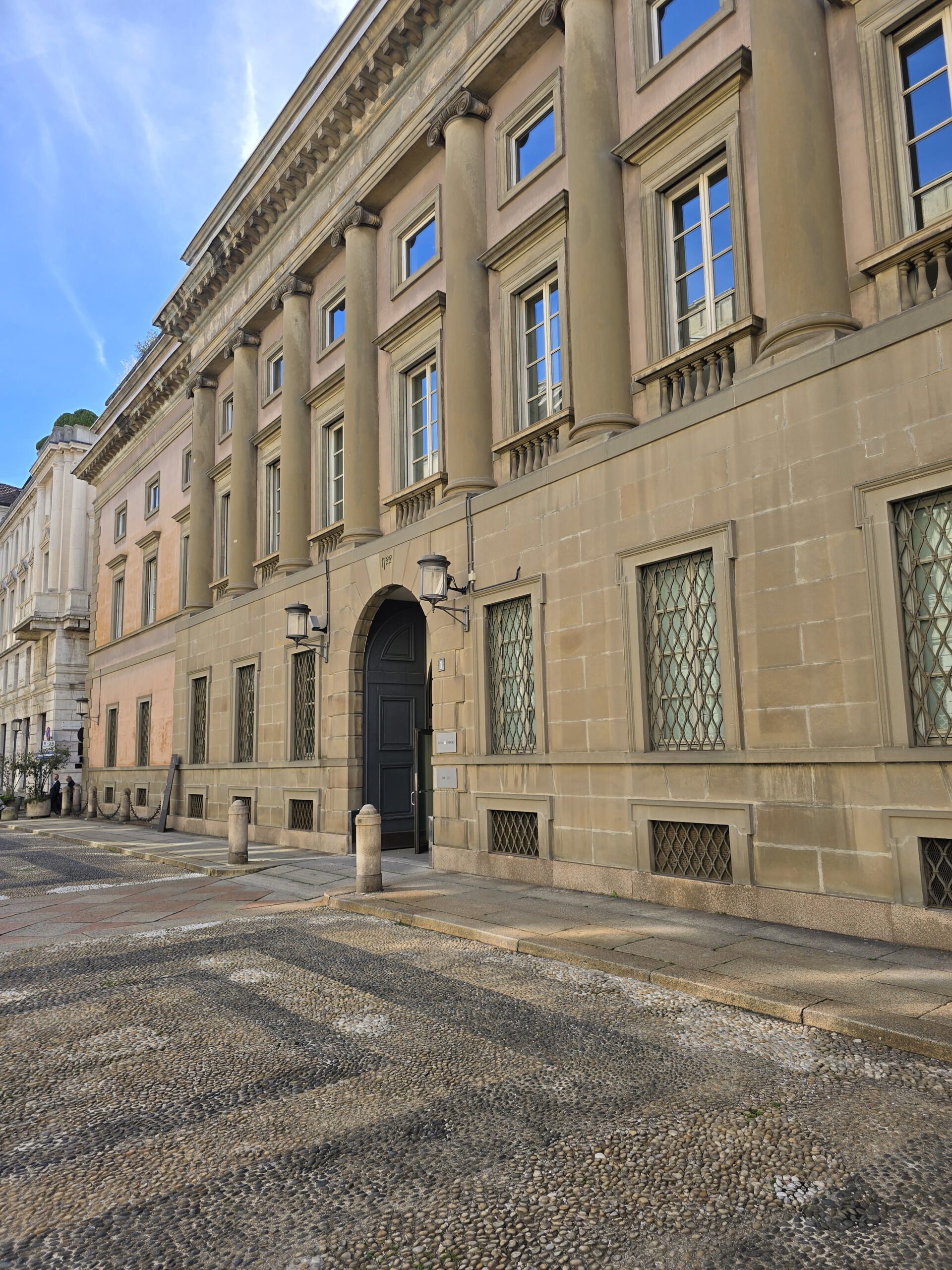
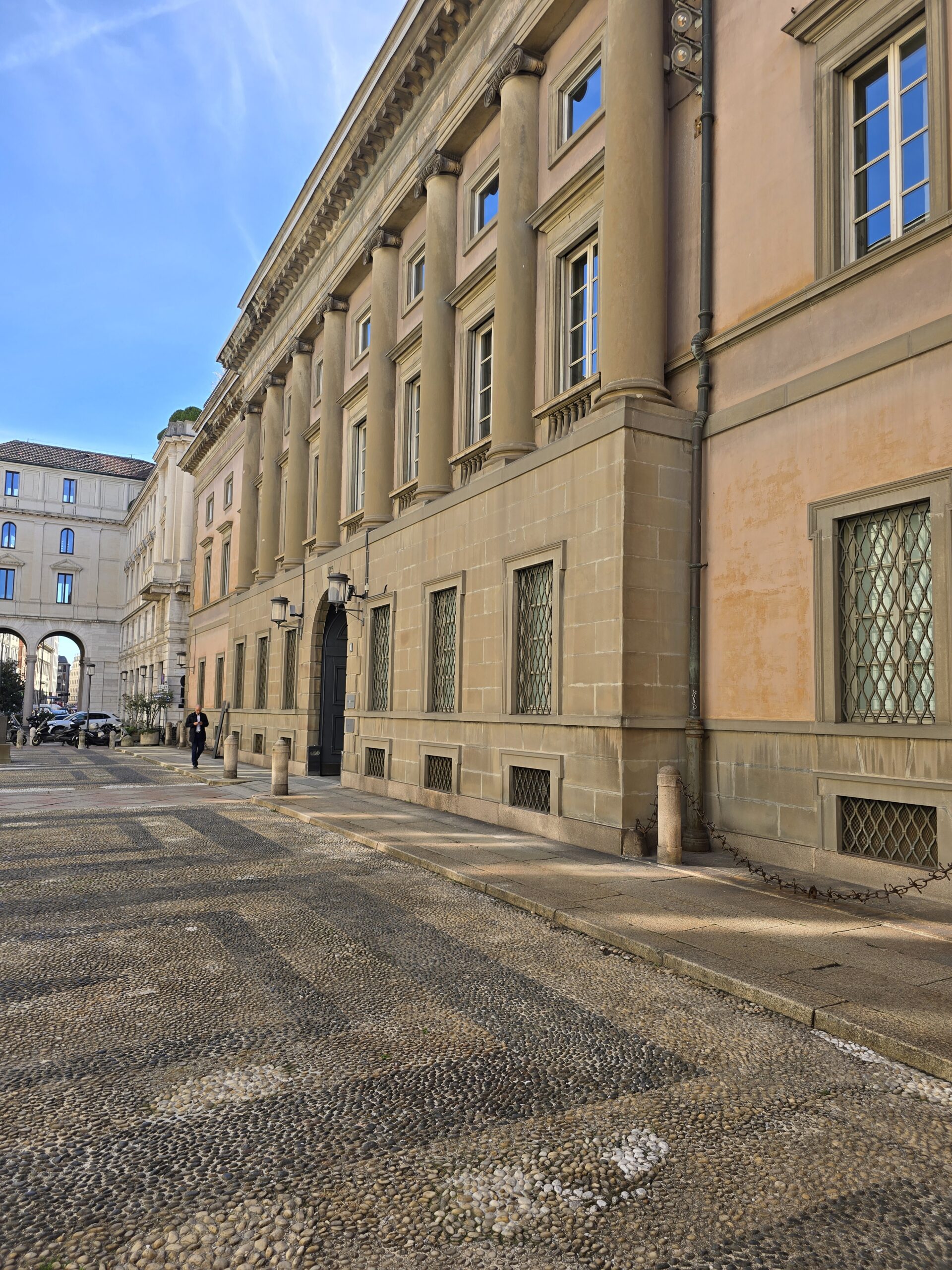
Palazzo Besana dates from around 1815 and was designed by Giovanni Battista Piuri.
Its façade has a distinctly Palladian character, with an imposing central section and eight Ionic columns rising above the ground floor. The warm grey stone gives the building an elegant, rather restrained appearance.
It is a different interpretation of Neoclassicism from Piermarini’s grand palace, but the two buildings complement one another beautifully.
The palace also has an interesting connection to another of Milan’s architectural curiosities: its internal courtyard communicates with the nearby Casa degli Omenoni, famous for the enormous sculpted male figures decorating its façade.
An unexpected architectural neighbour, to say the least.
Cristina Trivulzio di Belgioioso: A Remarkable Woman Finally Recognised
One of the most meaningful additions to Piazza Belgioioso is also one of its most recent.
In September 2021, a bronze statue of Cristina Trivulzio di Belgiojoso was unveiled in the square. Created by sculptor Giuseppe Bergomi, it was Milan’s first public monument dedicated to a named female historical figure, rather than a religious or allegorical subject.
An astonishingly late first for a city with such a long history.
Born into the Milanese aristocracy in 1808, Cristina was a princess, writer, journalist, political activist and an important figure in the Italian Risorgimento, the movement that led to Italy’s unification.
She supported the struggle for Italian independence, spent years in exile, established influential intellectual connections in Paris and devoted considerable energy and resources to social reform.
Her initiatives included schools, childcare facilities and assistance for disadvantaged communities. During the defence of the Roman Republic in 1849, she also organised care for wounded soldiers.
Why Piazza Belgioioso Is Worth Discovering
What makes Piazza Belgioioso so special isn’t simply its architecture, beautiful though it is.
Within a remarkably small space, it tells several stories about Milan: the sophistication of its eighteenth-century aristocracy, the intellectual life of the nineteenth century, the struggle for Italian independence and the enduring importance of literature and culture.
It also captures something very characteristic of the city.
Milan doesn’t always reveal its most interesting places immediately. Sometimes its greatest treasures are tucked away just beyond the busiest streets, waiting for someone to take a small detour.
Piazza Belgioioso is one of those places.
Where: Piazza Belgioioso is in Milan’s city centre, a short walk from Piazza della Scala and the Duomo.
If you enjoyed this post, you might also like:
Things to See in Milan: The Story Behind the Giant Bronze Disc
This post was all about one of the most charming hidden gems in Milan, Piazza Belgioioso, a delightful little square where magnificent Neoclassical palaces, literary history and fascinating personalities tell the story of the city’s illustrious past.