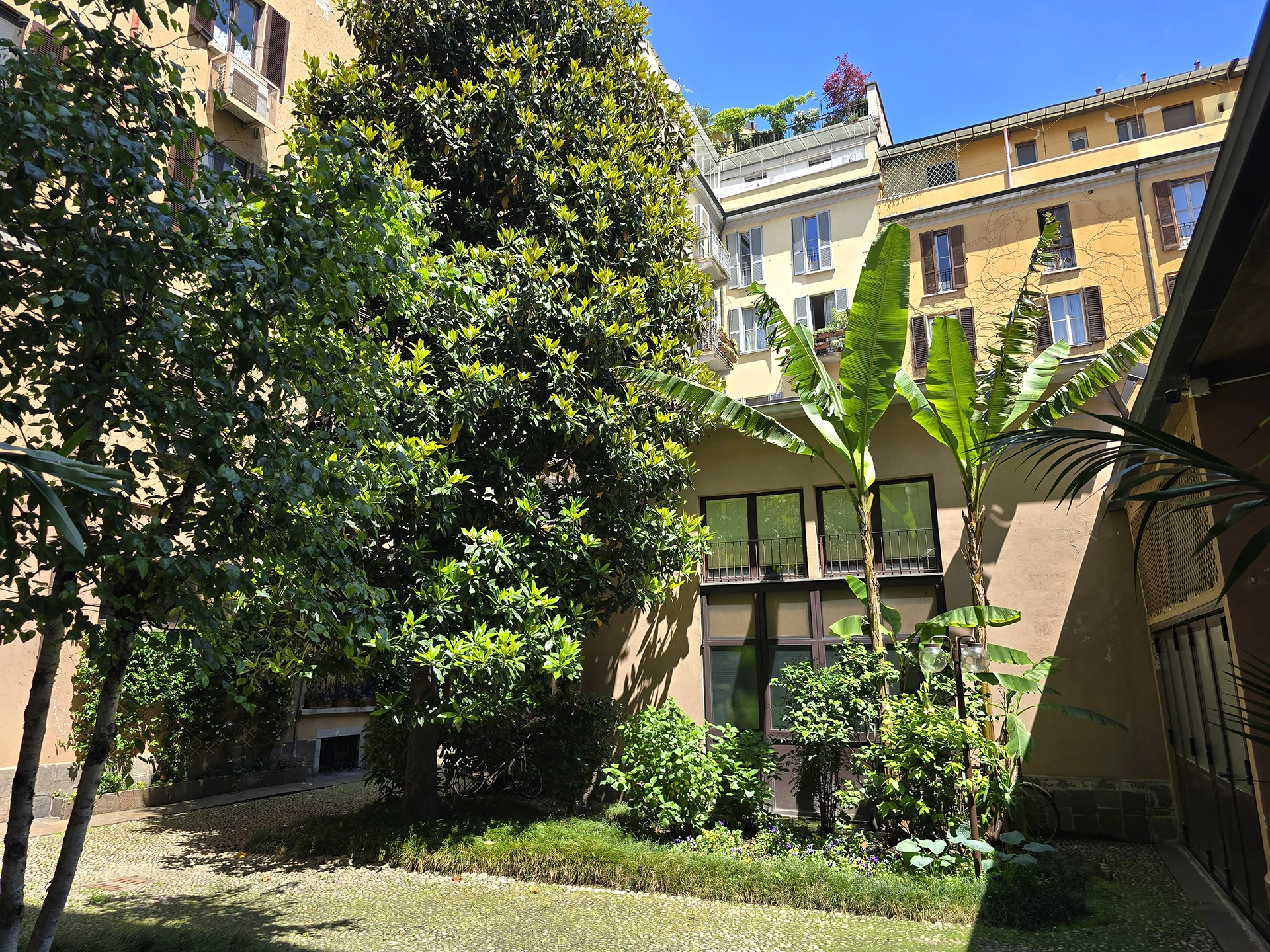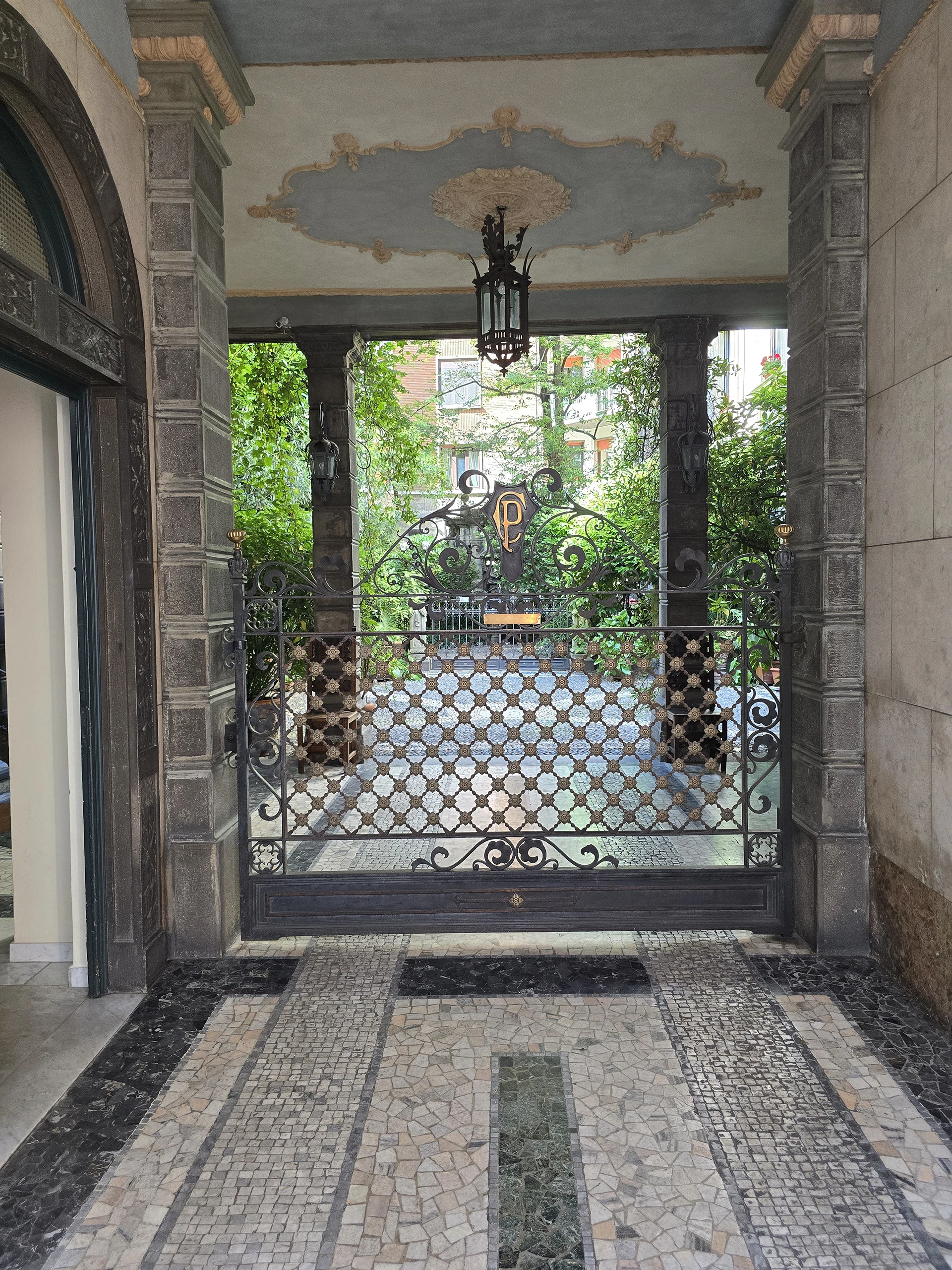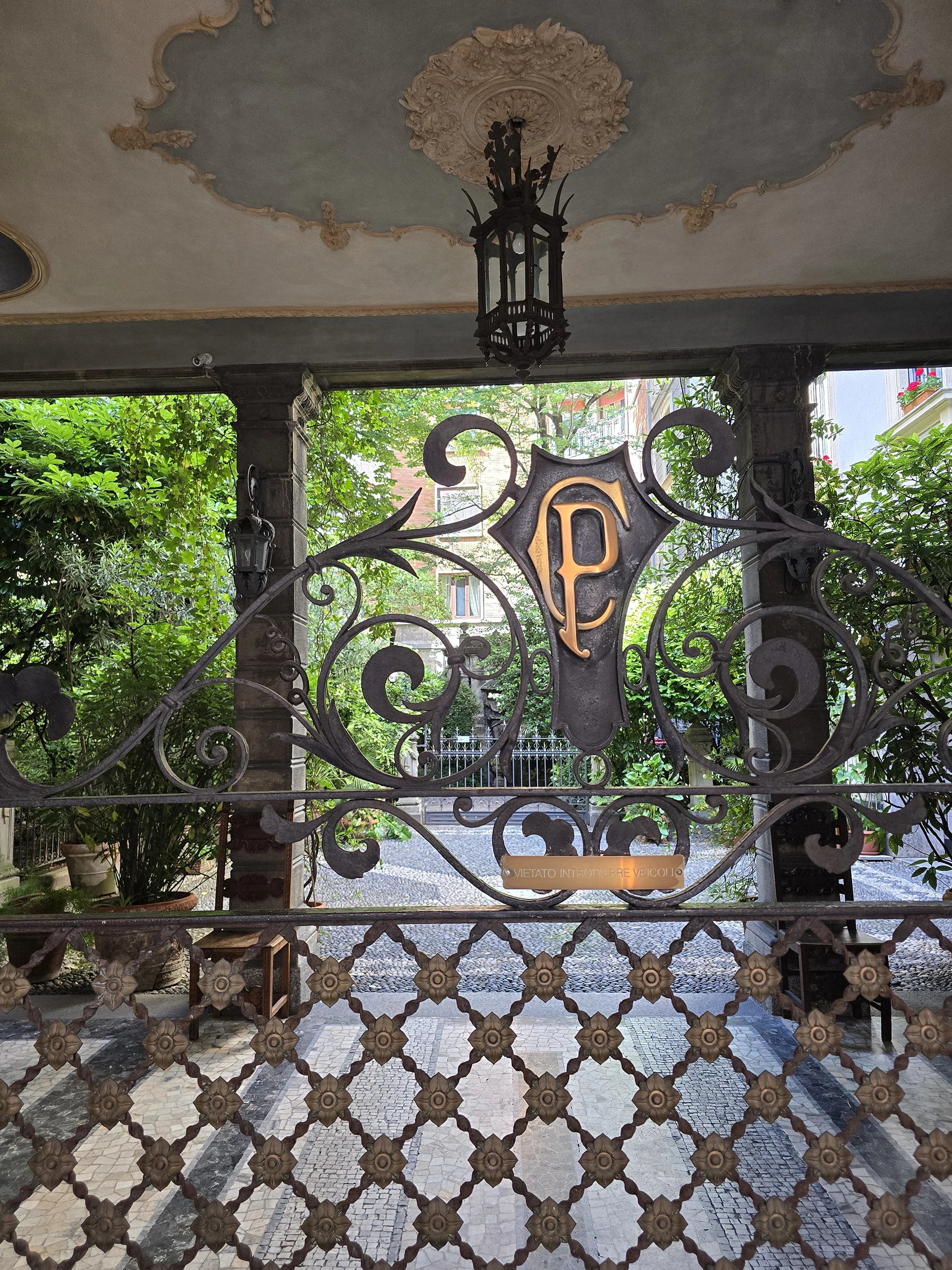
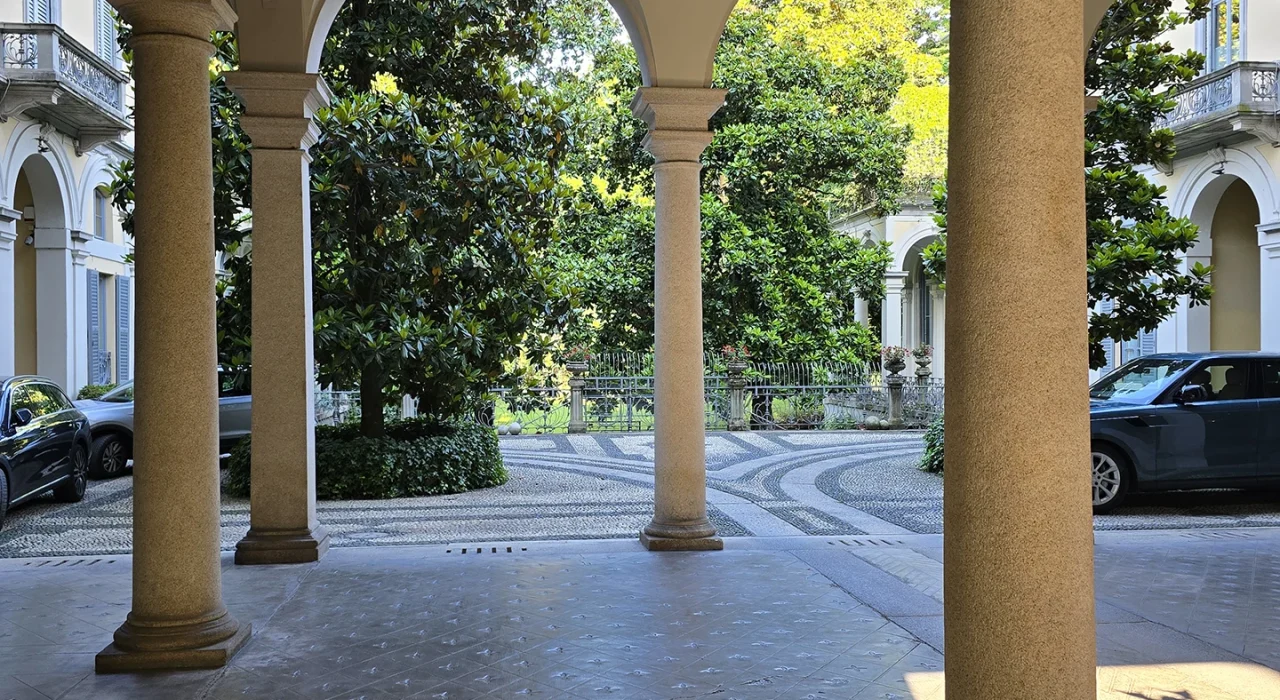
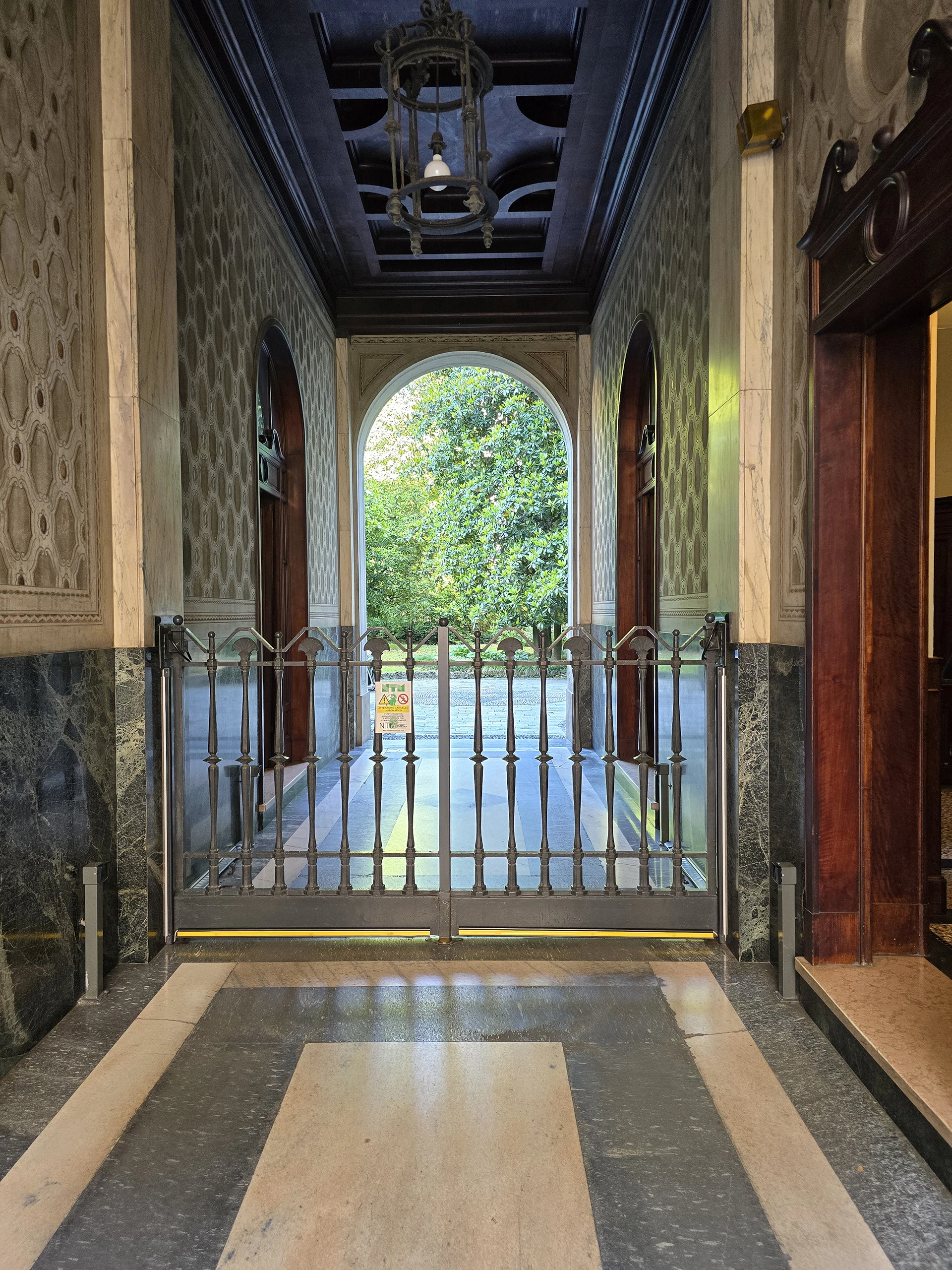
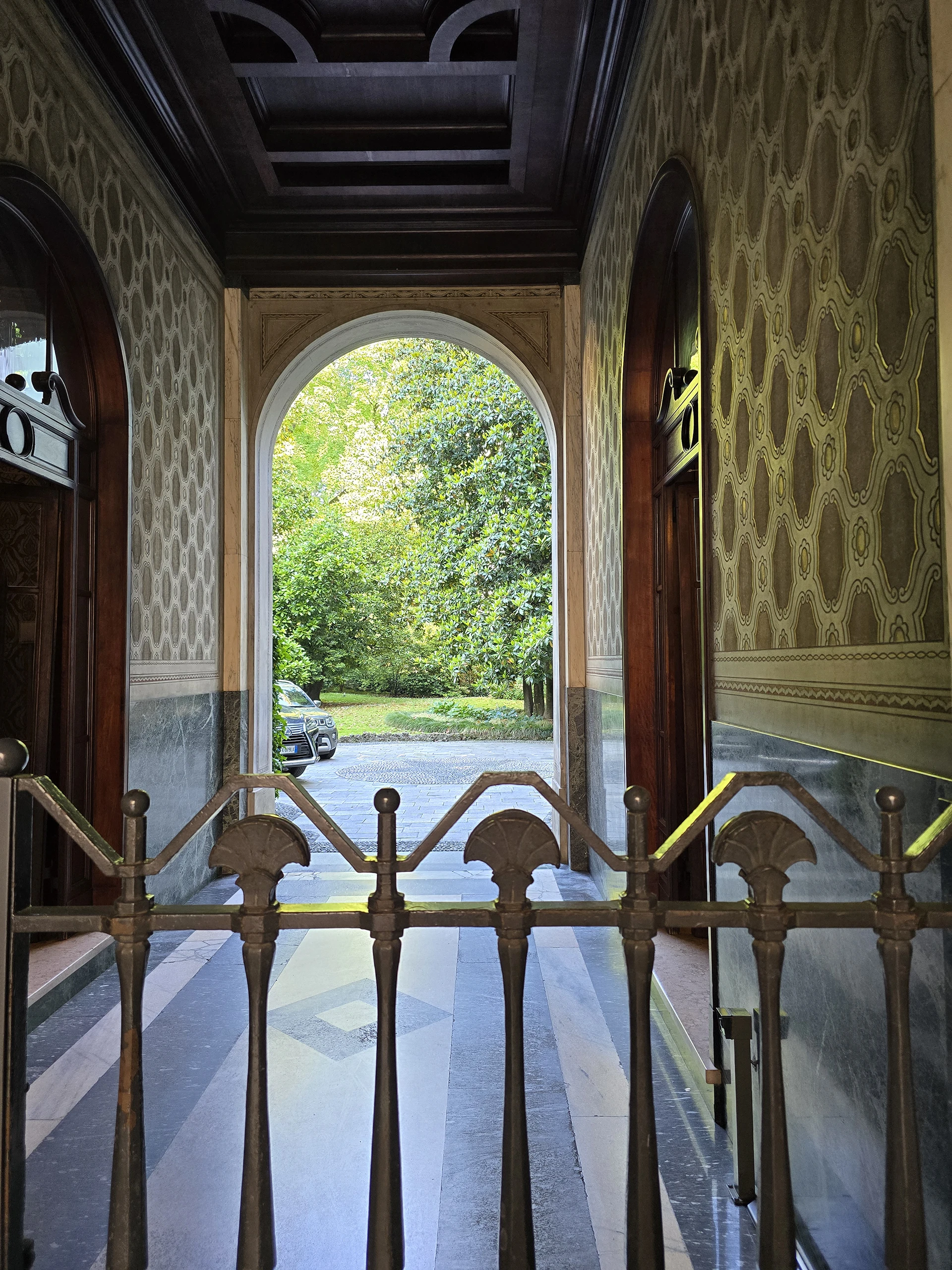
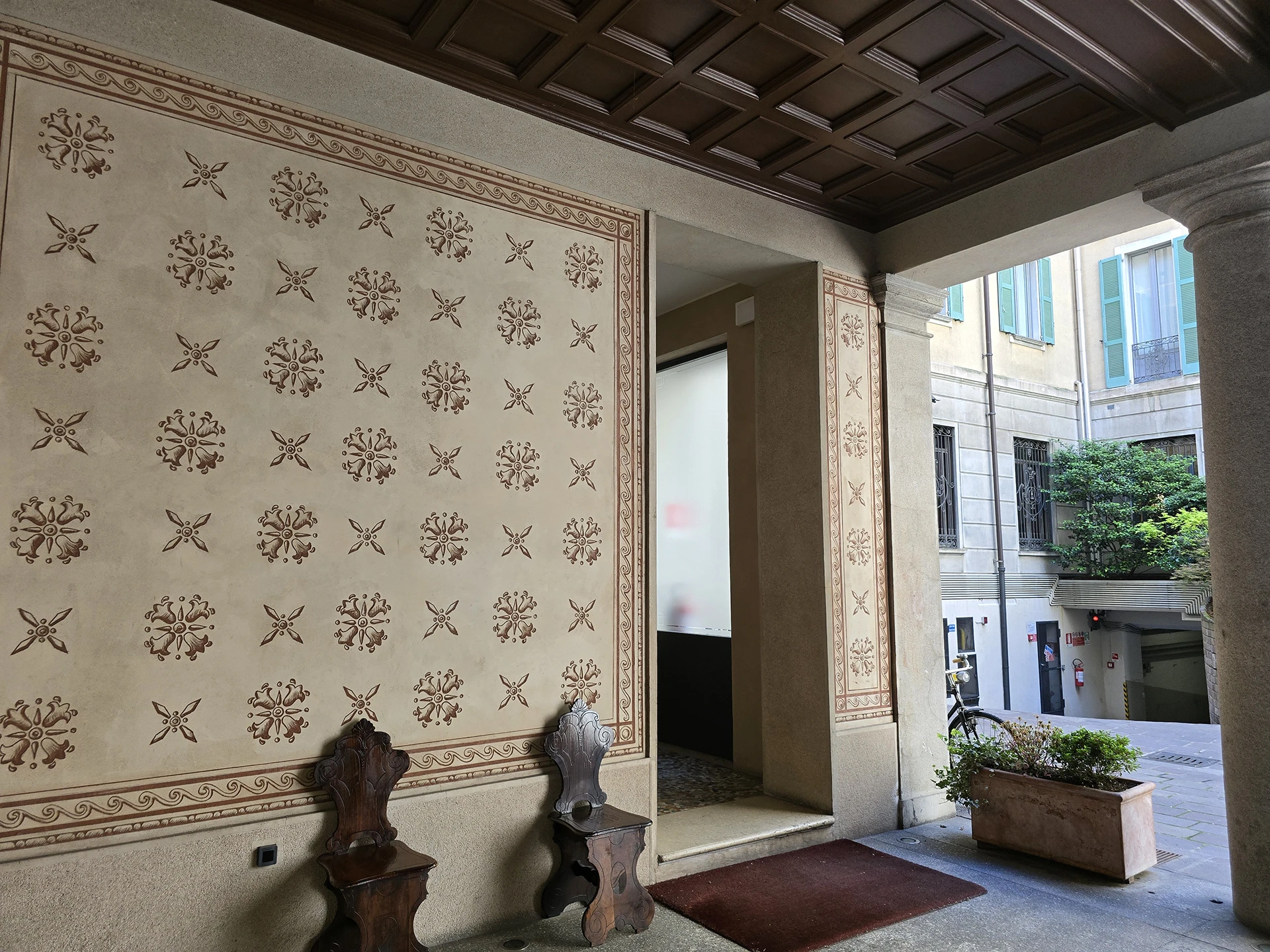
Milanese courtyards are beautiful and charming, both those in the most central parts of the city and also those in the so-called Old Milan (for example, in the Navigli district).
In this blogpost, we’ll take a look at the first ones. You’ll find these courtyards behind the façades of elegant houses dating back to the late 1800s and early 1900s. They immediately convey a sense of peace and tranquillity, in stark contrast to the hustle and bustle of this busy city.
A few of these magnificent courtyards are open, but in most cases you can admire them by going through the entrance doors (if open) and looking through the wrought iron gratings.
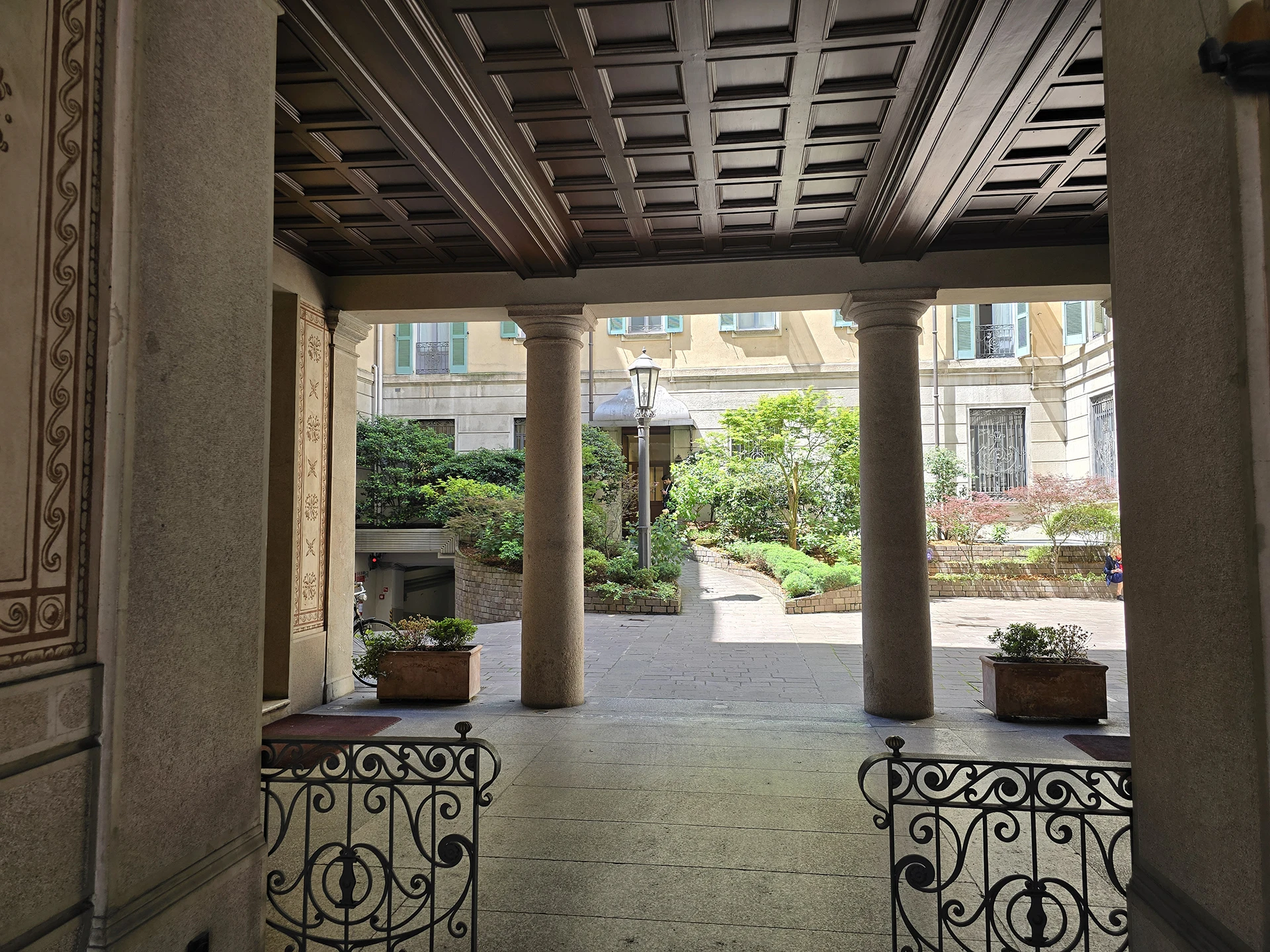
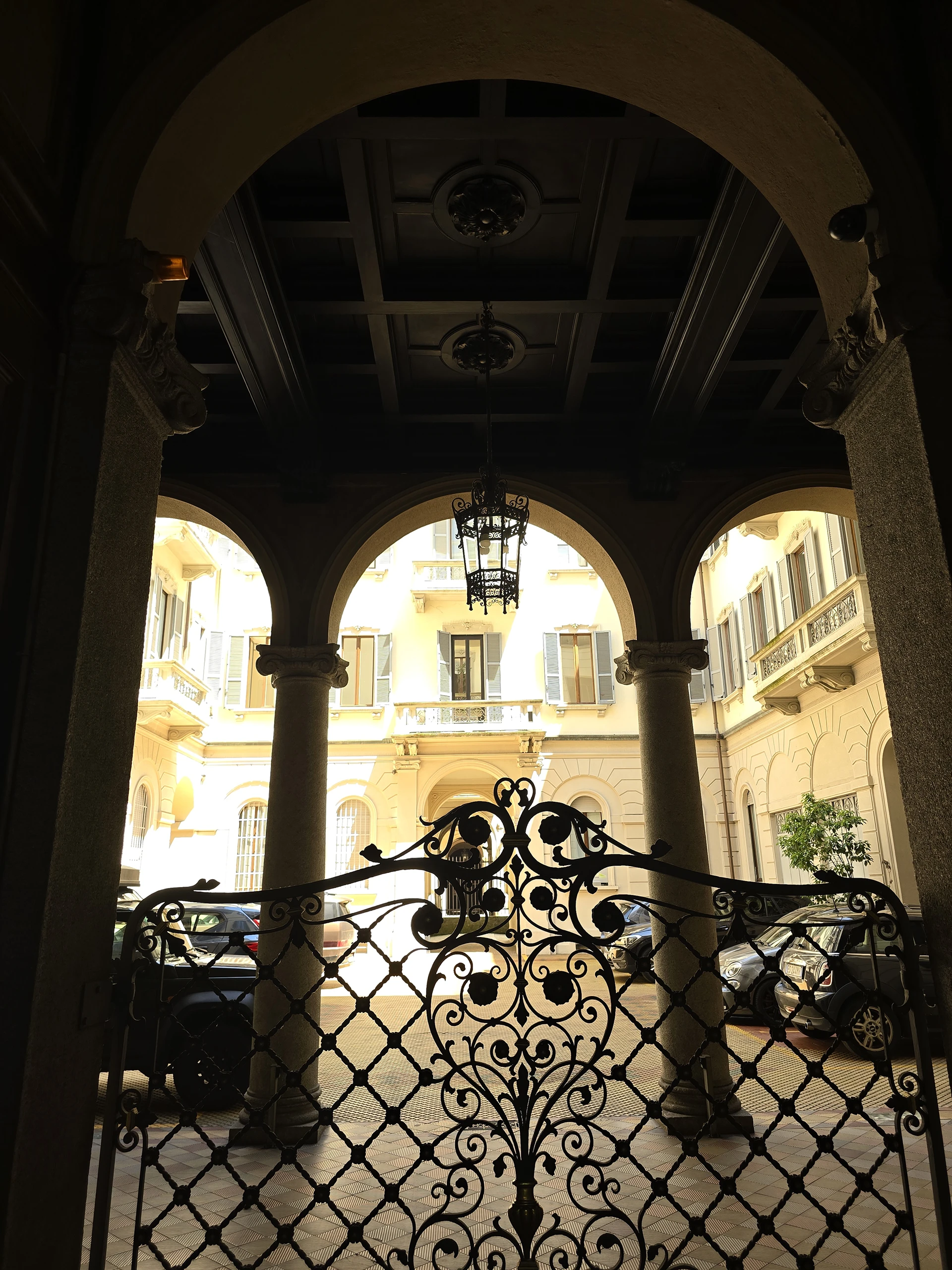
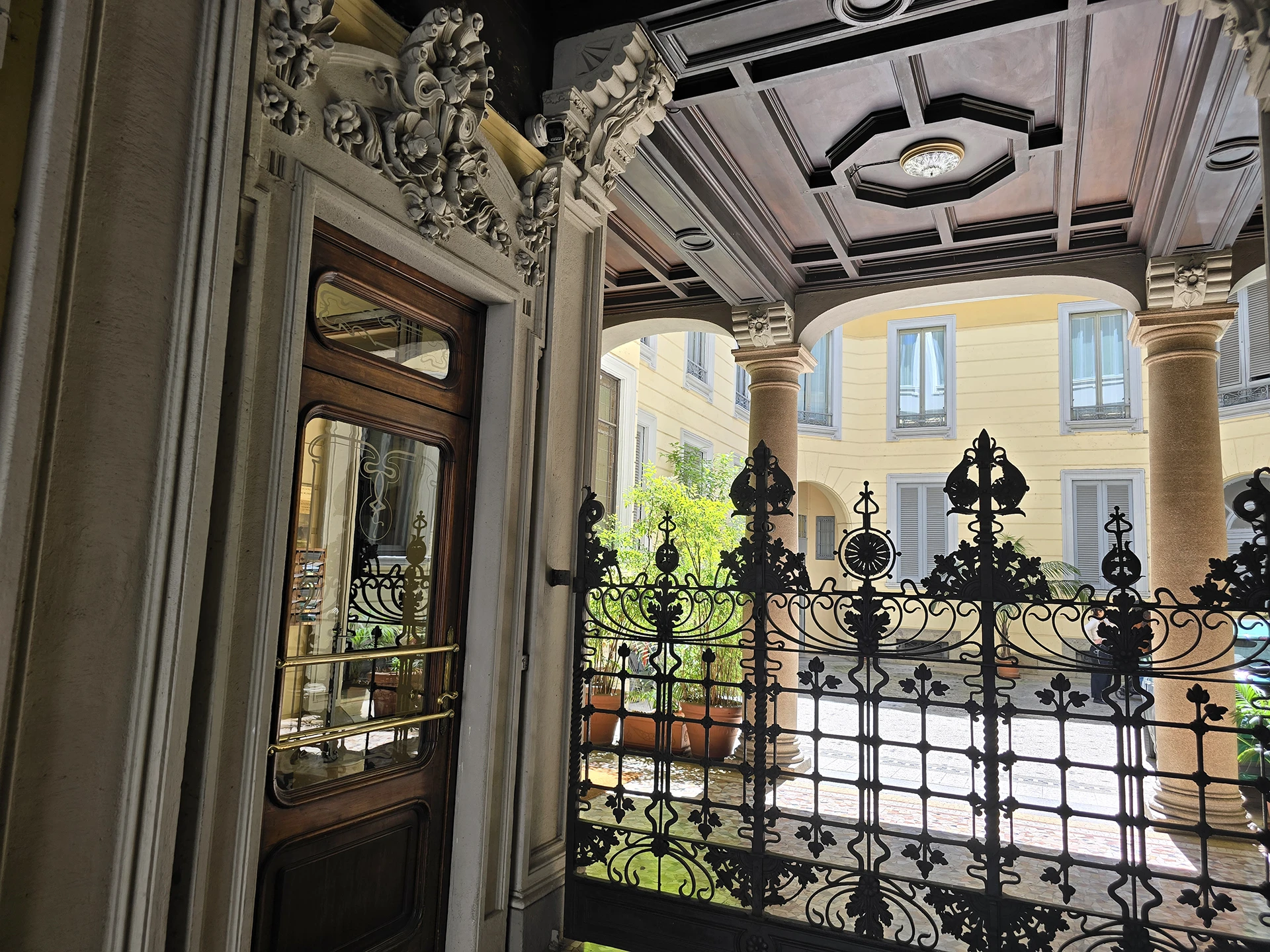
The most common architectural elements you’ll find are porticoes with ornate and colourful capitals, monolithic or cylindrical columns, coffered ceilings, and even ceramic decorations. And different varieties of plants – including maple trees, plane trees, lime trees, beech trees, as well as flowers and aromatic plants.
The photographs in this article were taken in the area of Via Vincenzo Monti (a beautiful street in the centre of Milan, lined with wonderful trees that shade the road) and in the area of Corso Italia.
You’ll notice that the walls of most of these houses are yellow: a colour that is in fact commonly known as “Giallo Milano” (literally “Yellow Milan”).
The reason for the popularity of this colour in Milan is that painting houses yellow meant they didn’t need to be repainted too often due to soot (which “stained” white walls much more quickly), with significant savings for the local administration.