

Milan Design Week 2026 was a great opportunity to discover the new pieces presented by brands across the industry. This is my selection of the Cassina designs I found most interesting.
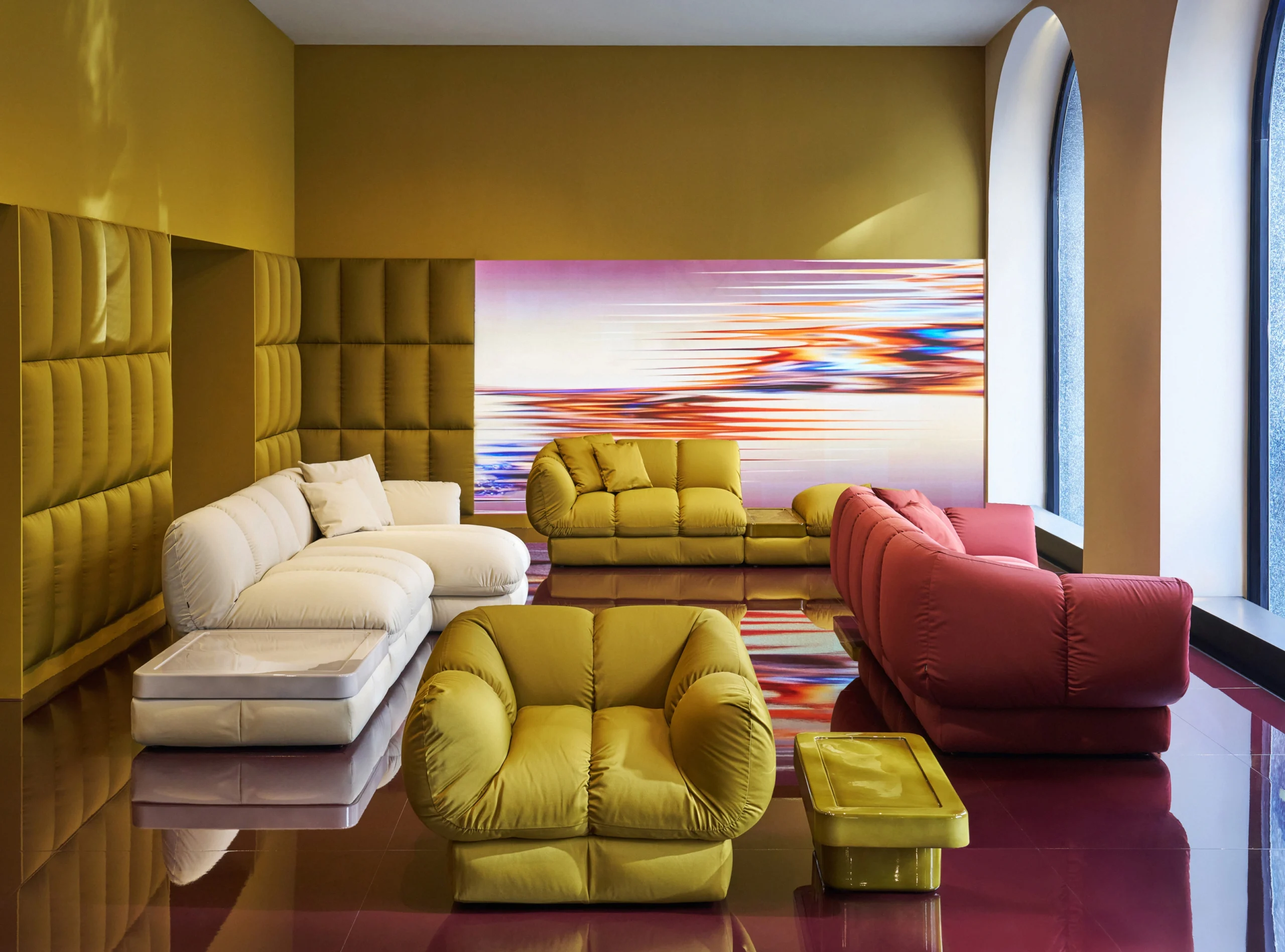
Milan Design Week 2026 was, once again, an invitation to get slightly carried away by what the design world has to offer. For one week, the city was at its most crowded, with waves of international journalists, buyers and design enthusiasts arriving from across Europe — and well beyond. It’s an energy that’s hard to replicate at any other time of year, even if it comes with one small drawback: finding a taxi to move from one event to another can quickly turn into a minor challenge.
Among the many names involved, Cassina remained one of the most recognisable — not just for its history, but for its long-standing collaborations with designers and architects who have shaped some of the most iconic pieces of modern design.
For me, that legacy is almost instinctively associated with one object: the Chaise Longue by Le Corbusier, Pierre Jeanneret, and Charlotte Perriand, produced by Cassina — a piece that feels particularly familiar, having quite literally been part of my everyday surroundings growing up, always there in my parents’ living room.
This year, Cassina’s presentation at Milan Design Week 2026 revolved around the idea of “material intelligence”, exploring how finishes, textures and unexpected combinations can redefine familiar forms.
Here’s what actually stood out.
Ardys — comfort, but make it unapologetically visible
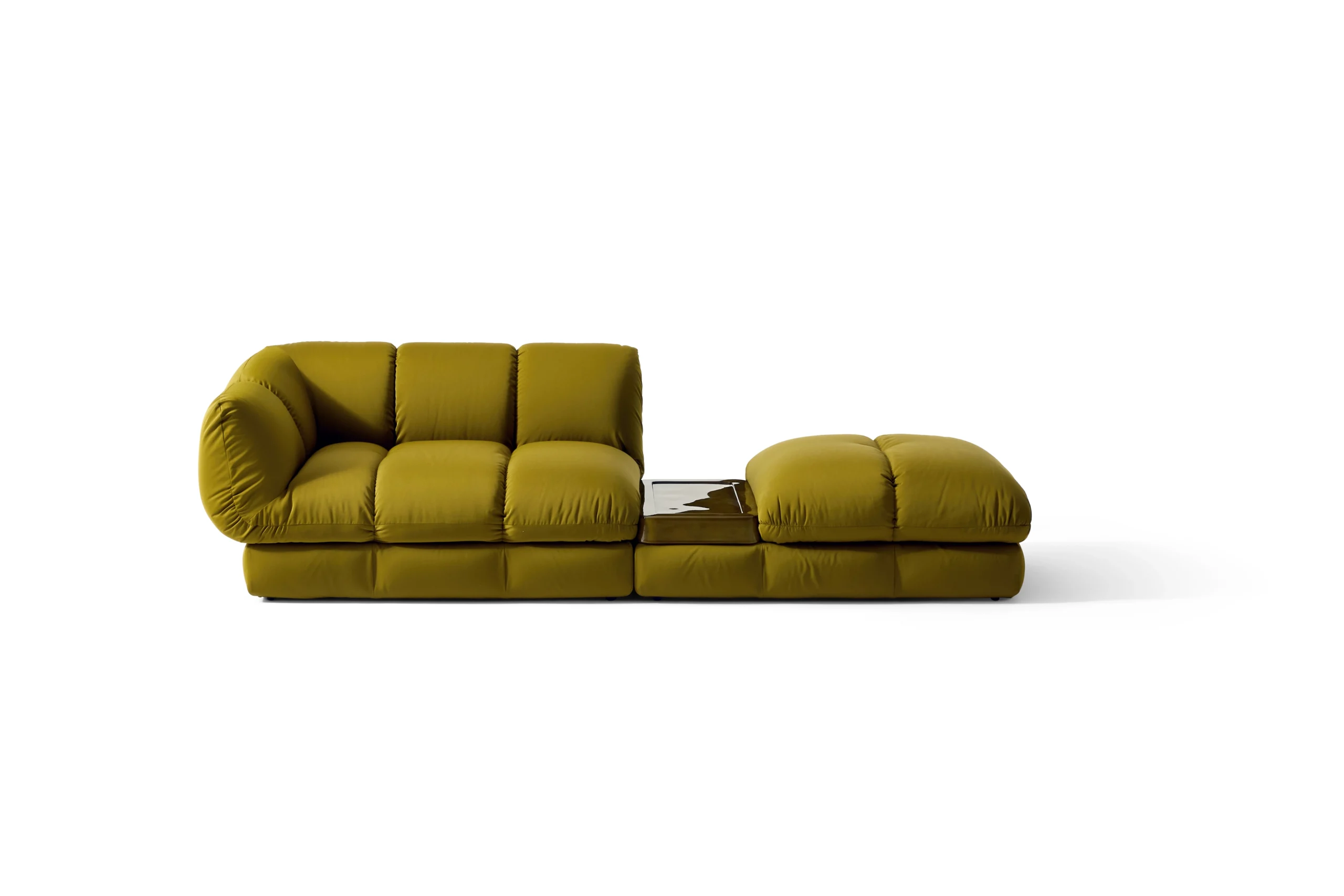
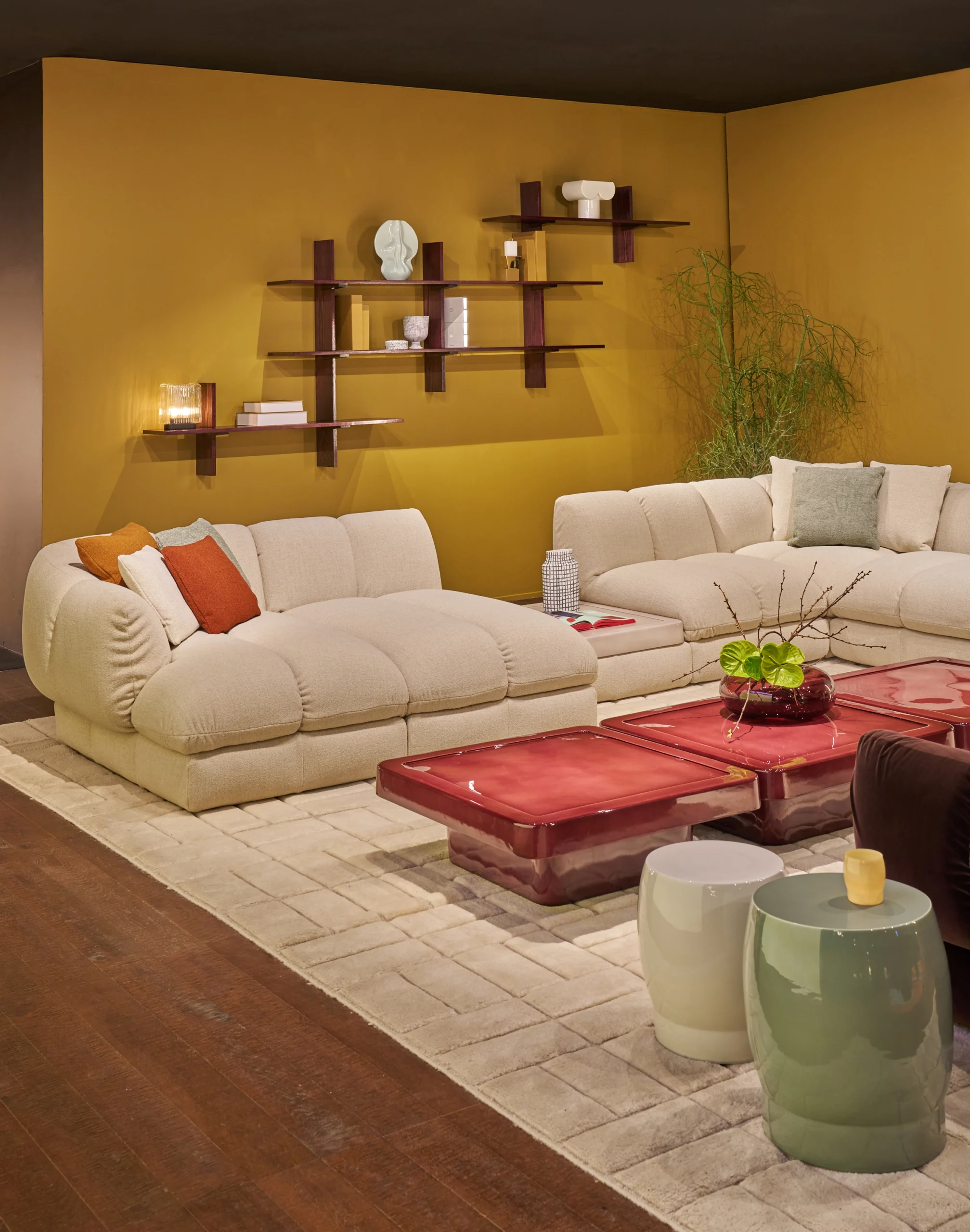
Ardys, the new upholstered sofa designed by Patricia Urquiola, is one of those pieces where comfort is immediately visible — even before you sit down. The volumes are soft, almost exaggerated, with a quilted structure that makes the padding feel deliberately on display rather than hidden.
It’s a low, modular system that can be reconfigured quite freely, which makes it adaptable. The individual elements can be moved, separated or combined depending on the space — though visually, it’s the generous proportions that tend to dominate.
What makes it particularly interesting is the contrast between this very soft, almost enveloping appearance and some of the more unexpected material choices, including a new fabric with a slightly technical, almost sportswear-like finish.
It’s the kind of sofa that makes you immediately think of coming home after a long day and sitting down “just for a moment” — and ending up comfortably sunk into it without quite noticing that the evening slipped away.
FF.Spine bookcase — structure, stripped down to its essentials
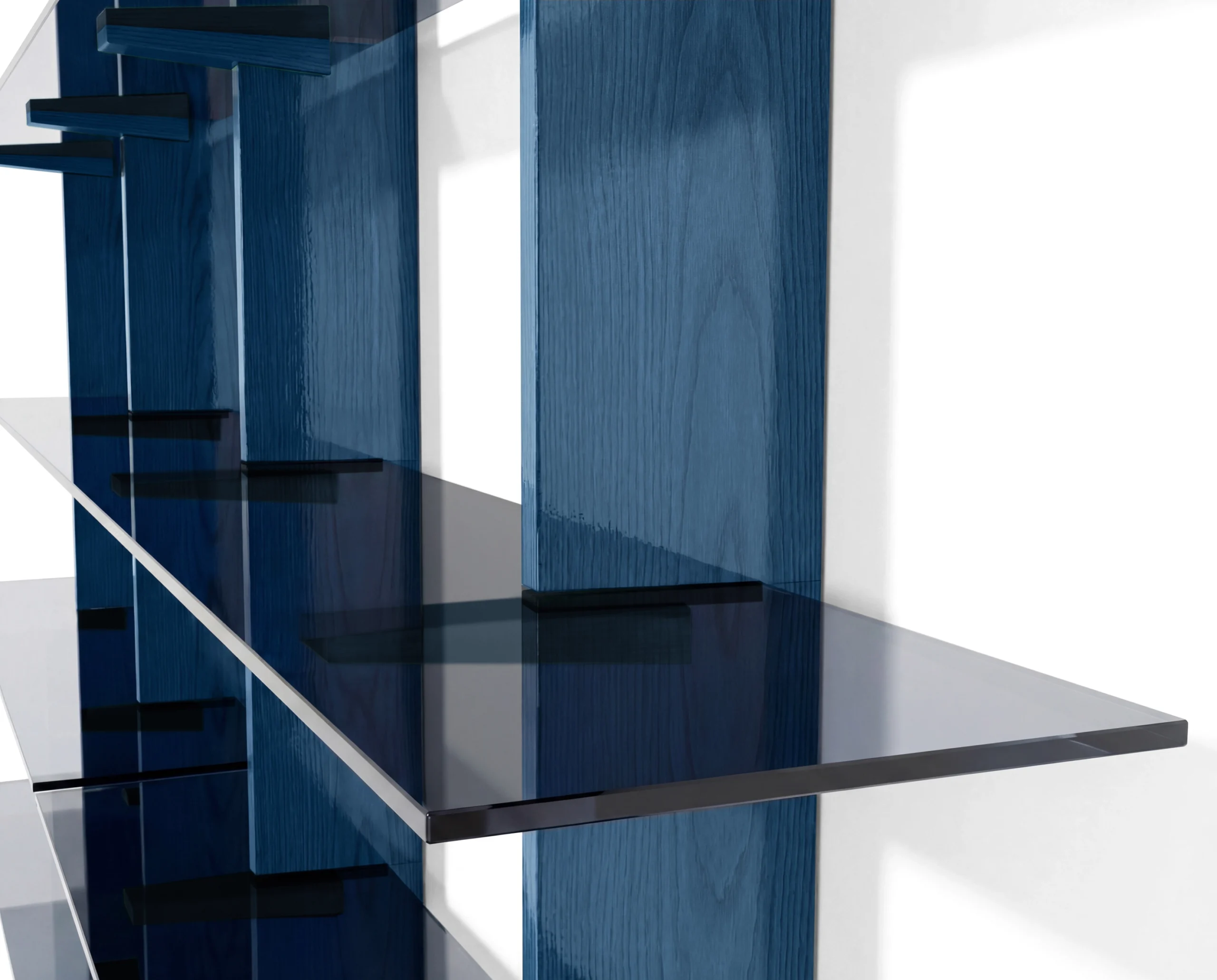
The FF.Spine bookcase, designed by Formafantasma, takes a very different approach. Where Ardys is all about softness, this is almost entirely about structure — a system of vertical supports and horizontal shelves that feels deliberately pared back, in the best possible sense of the expression.
The design is modular, allowing for a wide range of compositions depending on the space, from more traditional shelving to configurations that can also accommodate a TV. What stands out, though, is the way the structure remains clearly visible, almost becoming the main feature rather than something to be hidden.
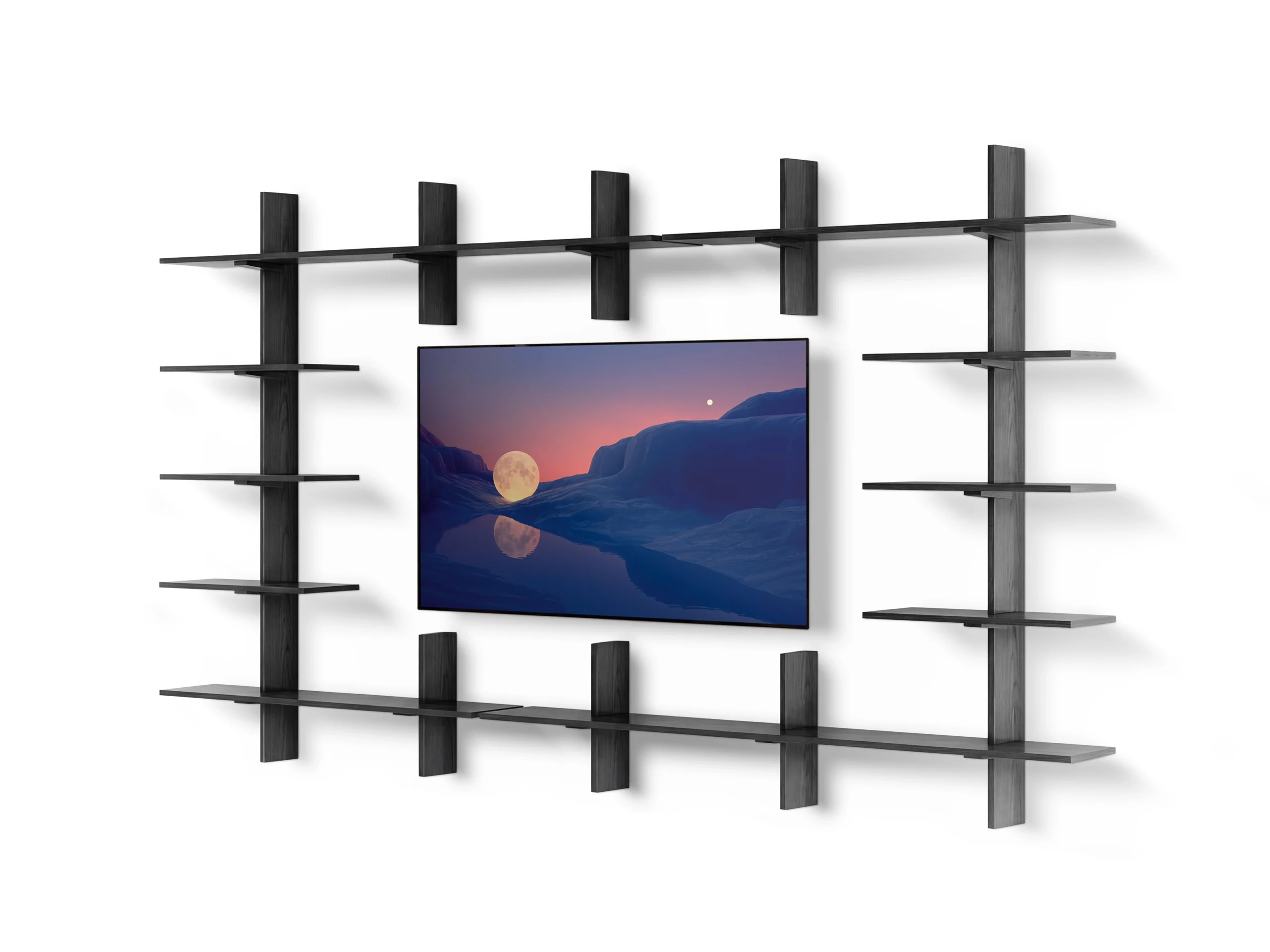
This year’s update introduces new finishes, including glossy wood and smoked glass shelves, which add a layer of depth without complicating the overall design. The result is something that feels light, even when it occupies an entire wall.
It’s the kind of piece that quietly does its job — and then ends up organising far more than you originally intended.
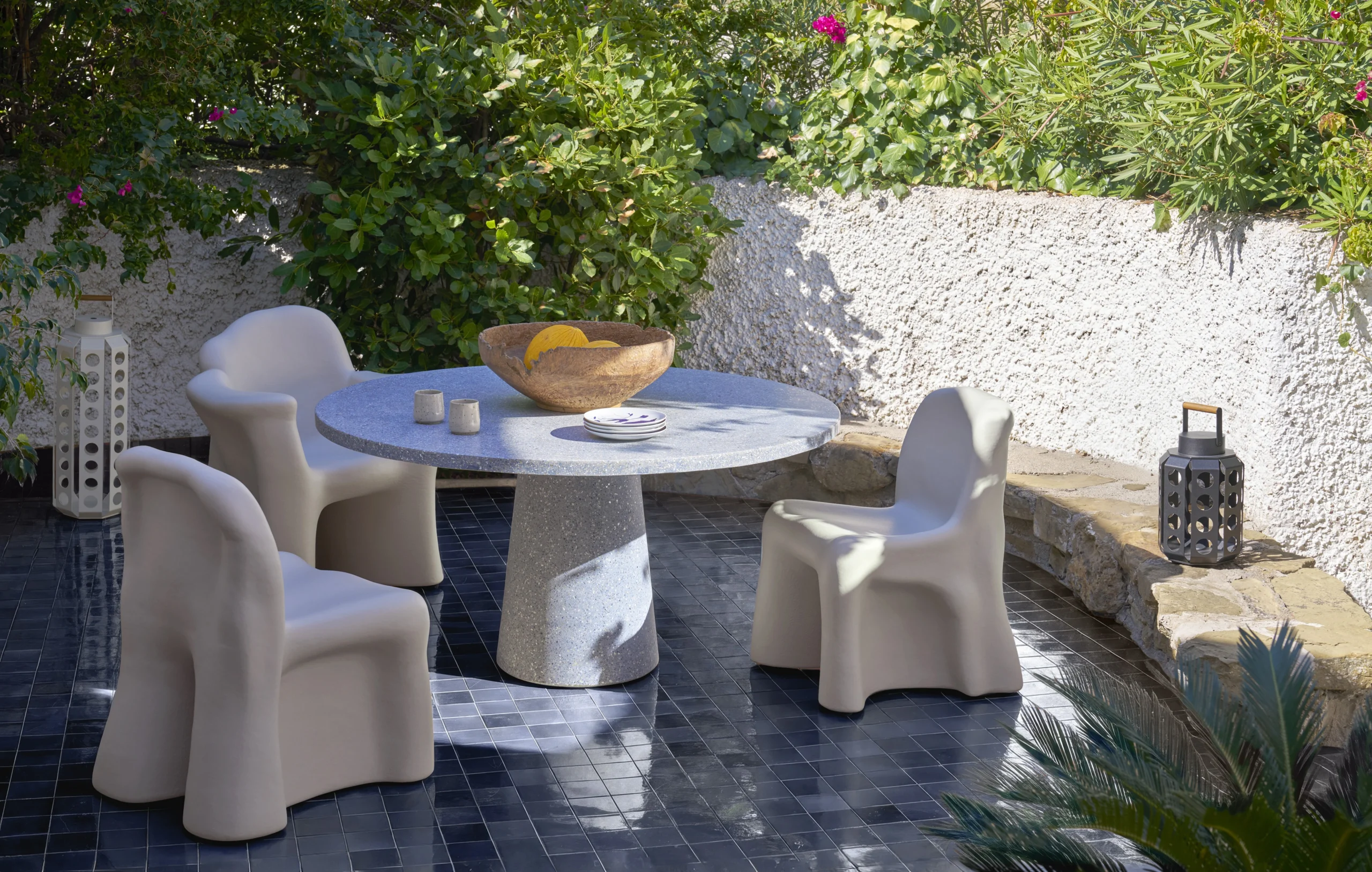
Dalila — refusing to look like a conventional chair
With Dalila, Gaetano Pesce brings his unmistakable, almost rebellious approach to design into the open air. Originally created in 1980 and now reissued for both indoor and outdoor use, the piece feels less like a conventional chair and more like a small, sculptural presence that just happens to be functional.
Its shape is soft, fluid — somewhere between an armchair and a form that could have been carved by nature rather than designed. There’s nothing rigid or overly structured about it, which is exactly the point: Pesce was never interested in perfection, but in individuality.
In fact, his idea was to create objects produced in series that are never completely identical — much like people. It’s a concept that still feels surprisingly fresh, especially in a world that often leans towards uniformity.
Now also adapted for outdoor settings, Dalila keeps that same expressive character, but adds a slightly unexpected twist: it’s the kind of piece you might find on a terrace overlooking the sea, quietly stealing the scene without ever trying too hard. And there’s a certain softness to it that feels quietly, almost unexpectedly charming.
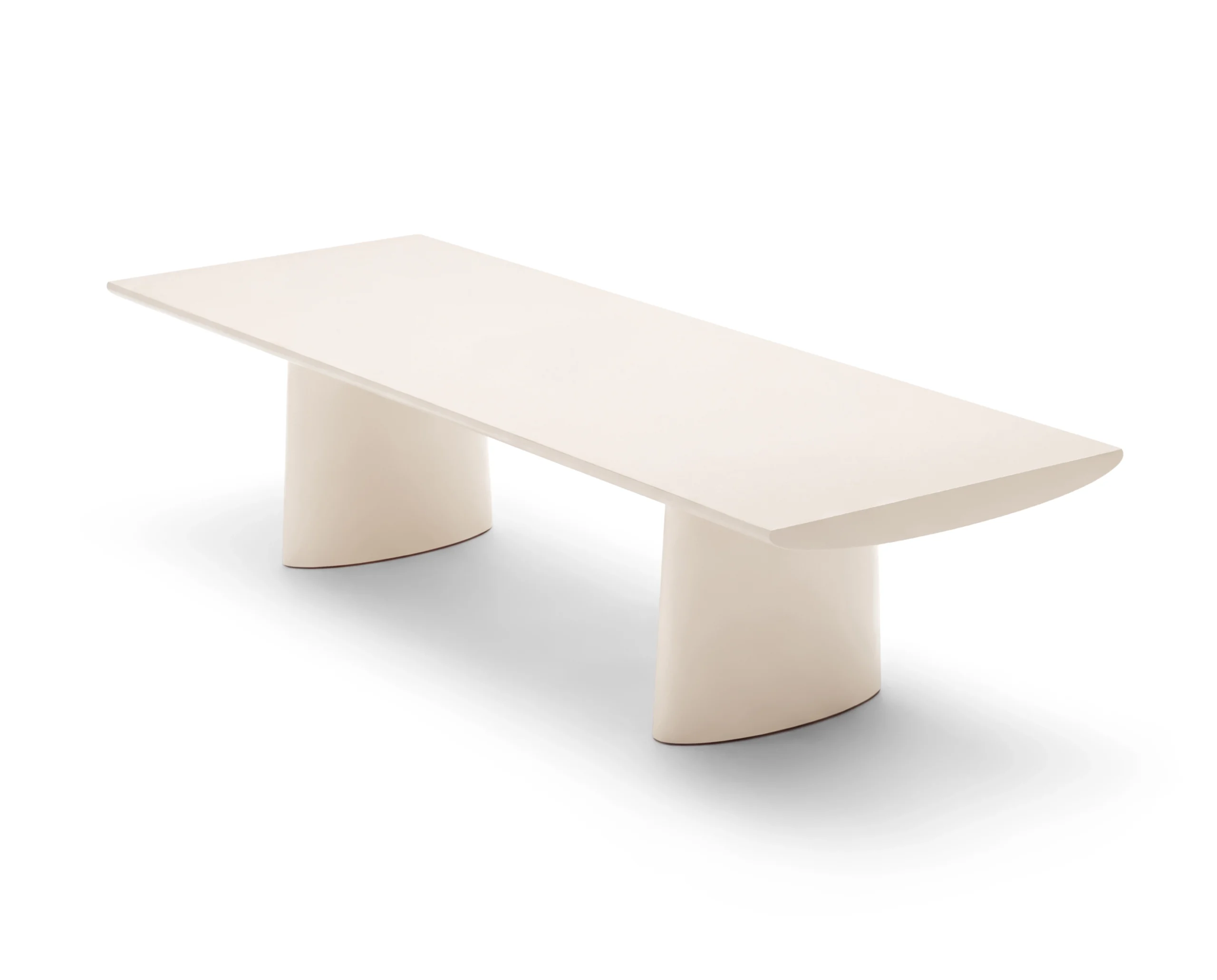
AB Dining (Karakter x Cassina) — minimalism, with a quietly sculptural edge
The AB Dining table, designed by Aldo Bakker for Karakter x Cassina, sits somewhere between furniture and sculpture, but in a much quieter way than that usually suggests. At first glance, it’s almost disarmingly simple — a pale, softly rounded surface resting on two solid, gently curved legs.
The details, though, are what define it. The edges are subtly rounded, the underside of the top curves slightly inward, and the proportions feel carefully balanced without ever becoming rigid. It’s a piece that relies on small adjustments rather than bold gestures.
The matte lacquer finish reinforces this sense of continuity, smoothing out the surfaces to the point where the joints almost disappear, giving the table a slightly monolithic quality — though without the heaviness that often comes with it.
Available in two sizes, it’s the kind of table that doesn’t immediately draw attention to itself — but ends up shaping the entire room all the same.
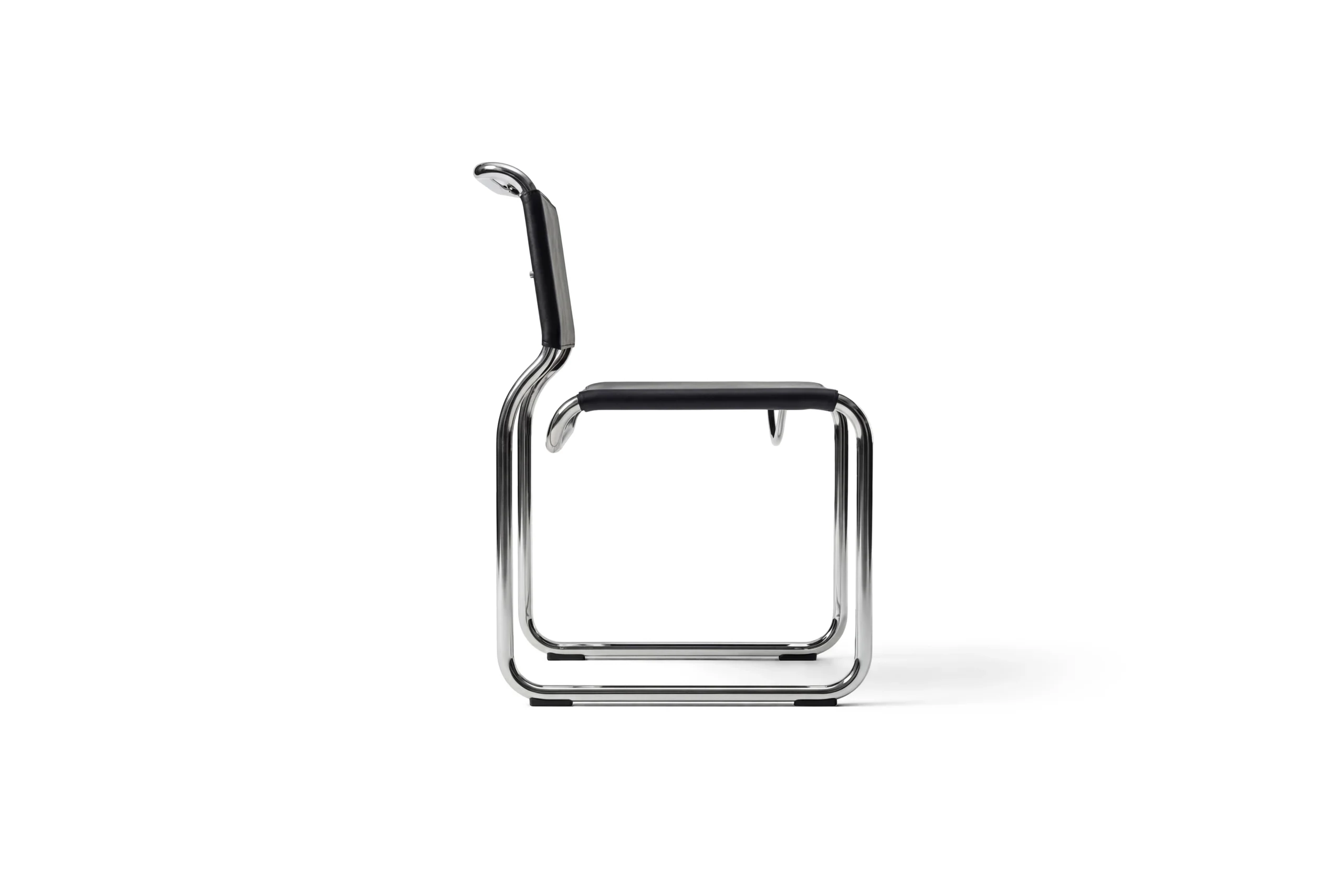
CH66 (Karakter x Cassina) — lightness, drawn in steel
The CH66 chair, originally designed by Nicos Zographos in 1966 and now reintroduced in the Karakter x Cassina collection, takes a more explicitly modernist approach. Built around a continuous tubular steel frame, it reworks the idea of the cantilever chair by subtly reversing its structure, creating a distinctive double curve between the seat and the backrest.
Visually, it’s almost reduced to a single line — precise, controlled, and deliberately lightweight. The leather seat and backrest add just enough presence without softening the overall effect, which remains firmly defined by the geometry of the frame.
Both resistant and lightweight, it integrates into spaces in a discreet and unobtrusive way. A kind of understated elegance that, despite its different origins, feels unexpectedly close to the Milanese spirit.
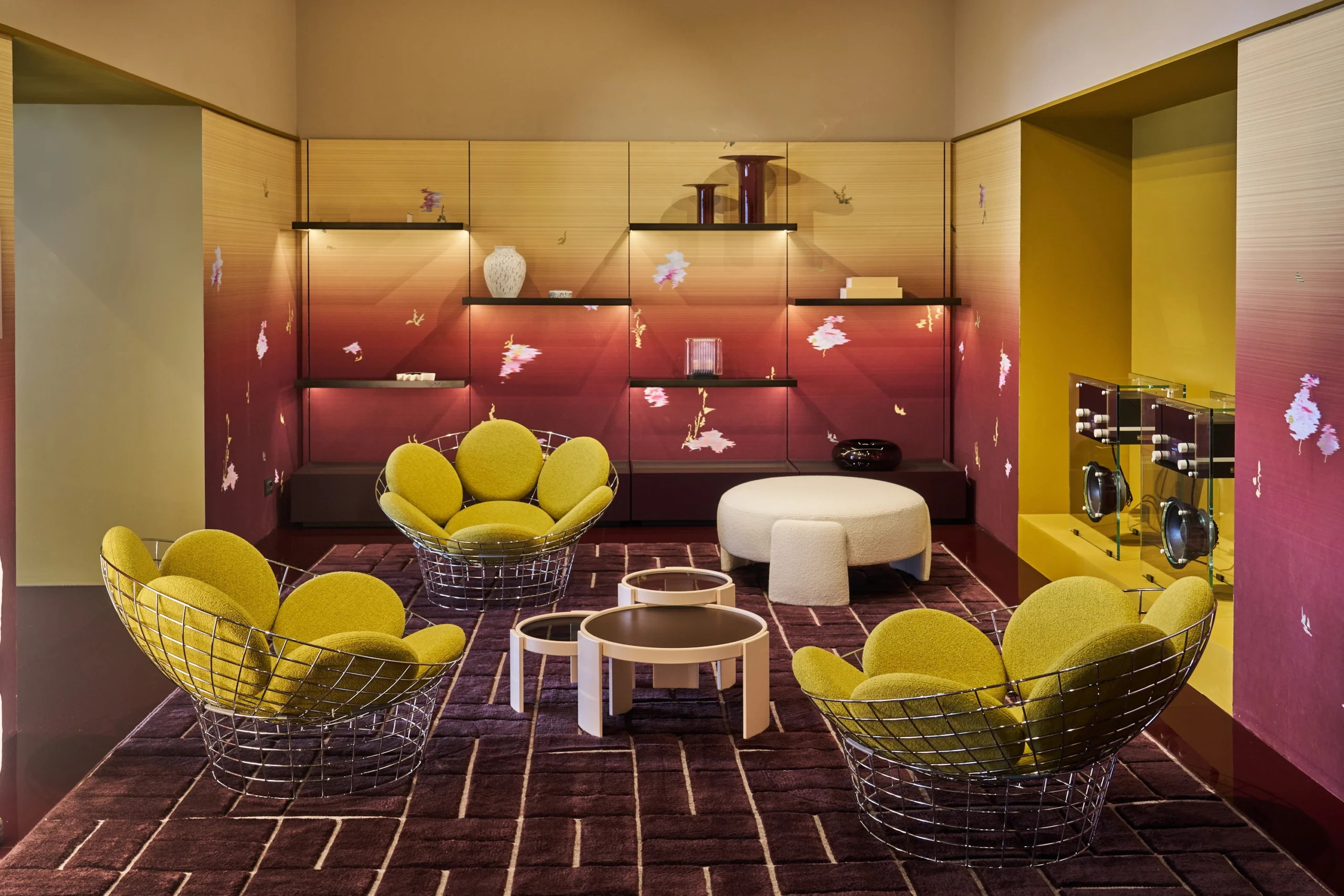
Peacock Chair (Karakter x Cassina) — somewhere between a seat and a small retreat
The Peacock Chair by Verner Panton, now part of the Karakter x Cassina collection, also marks the designer’s debut within this universe, in a year that celebrates the centenary of his birth. Originally designed in 1959, the chair is presented here as a reissue, bringing back one of Panton’s earliest and most experimental projects — a clear departure from the conventions of Scandinavian design at the time.
Built as part of his Wire series, it replaces the solidity of traditional furniture with a light metal structure that almost seems drawn in space. The seat itself is made up of a series of rounded cushions arranged in a fan-like composition, which immediately changes the way you read the object: less like a chair, and more like something you settle into.
The contrast between the rigid wire frame and the soft upholstery is what gives it its character, balancing structure and comfort without ever fully committing to either. It’s an unapologetically expressive piece that simply refuses to behave like a conventional armchair, while still offering its comfort.
It’s also the kind of seat that makes sitting properly feel like an unnecessary formality.
Where:
Cassina Store
Via Durini 16, Milan
Tel +39 02 76020745
www.cassina.com

If you enjoyed this post, you might also like this article:
Milan interior design / If this is what you’re interested in, you can’t miss De Padova
This post was all about Milan Design Week 2026 and, in particular, about the most interesting pieces Cassina presented this year.